
Léiffrawëschdag: Bringing an Old Tradition Home
Léiffrawëschdag—a little piece of Luxembourg, carried through generations, from the farms of our ancestors to a basket on our
kitchen table in Minnesota.
Celebrating Assumption Day
When I was a little girl growing up around Rollingstone, Minnesota, I remember seeing our farm neighbors carrying bundles into church in the middle of August. They were filled with corn stalks, flowers, garden vegetables, grains and whatever else was growing in their gardens and fields. At the time, I didn’t think much of it. It was simply something people did in our little farming community every year.
It wasn’t until I was older that I learned our little community was different AND there was a name for it, and that what I had watched as a child was a piece of our Luxembourg heritage. Léiffrawëschdag which translates to “Dear Lady’s Herb Brush Day” is celebrated on August 15th, the Catholic feast of the Assumption of the Blessed Virgin Mary. For generations in Luxembourg, the day has been closely connected to faith, family, the land and the hope for a successful harvest.
- What is a Wësch?
- A Tradition celebrating a Plentiful Harvest
- How we fill our Wësch
- A Luxembourg Minute + Our Family History
- The Assumption Harvest Fest
What is a Wësch?
This tradition centers around something called a Wësch, which translates to bouquet or bundle. They are made from the plants growing in local gardens and fields and while they’re pretty, they serve a much more meaningful purpose. The custom bundles beautifully connected faith with everyday farm and harvest life.
The plants were chosen not only because they were beautiful, but because so many of them had a purpose. Some were fragrant, some were nutritious, and others were valued for their medicinal qualities.
Historically, a Wësch could contain 30 to 35 different varieties of plants, gathered together into one bundle.
I love that detail because it says something about the people who made them. They noticed what grew around them. They knew their plants. They understood that beauty and usefulness could exist in the very same thing.
The flowers were lovely, but the herbs might also heal.
The grain would feed a family. The vegetables would fill a pantry.
The plants that grew around the farm were not simply decoration—they were part of everyday life.
A Tradition Rooted in Faith and Gratitude
The bundle was brought to church on August 15th to be blessed. Afterward, it might be taken back home and hung in the barn, where it was believed to bring good luck and provide protection for the home, the farm, the family and the animals. For the rural villages of Luxembourg, this was an important tradition among people whose lives were deeply tied to their land and livestock. The blessing of the Wësch was a way of expressing gratitude for what the land had provided, while also holding onto hope for a good and bountiful harvest.
And when I think about that, I can picture those bundles I remember seeing in Rollingstone.
I think about the farm families who gathered what they had grown and carried it into church. I think about how ordinary it must have felt to them. They weren’t putting on a history lesson or trying to preserve a tradition for future generations. They were simply doing what their parents and grandparents had done. They gathered from the garden and the fields, brought it to church, and gave thanks.
That is one of the things I love about traditions. The people living them rarely know that they are making history. They are just living their lives.
Farming has a way of reminding you that hard work doesn’t guarantee an outcome. You can plant the seeds, tend the garden, pull the weeds, watch the weather and do everything you know to do, and there are still plenty of things outside your control. Too much rain, not enough rain, a late frost, a storm, a pest you didn’t see coming. Some years are abundant and some are not. Most years are a little bit of both.
And yet, somehow, there is always something to gather. That is why we’re bringing a little piece of this tradition back into our own home this year.


What should I put in a Wësch?
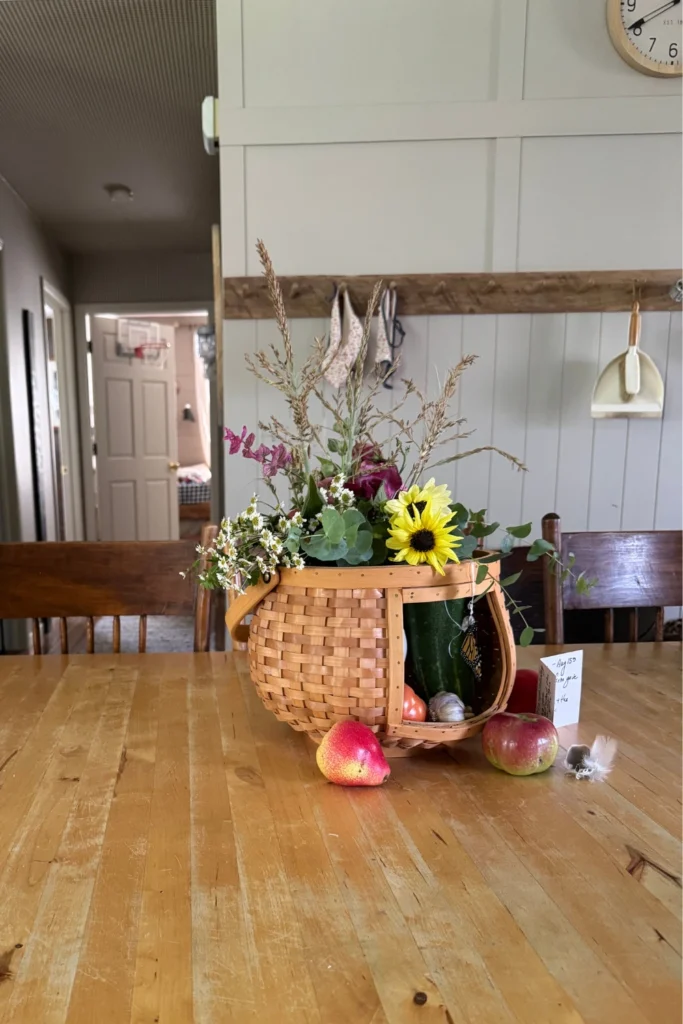
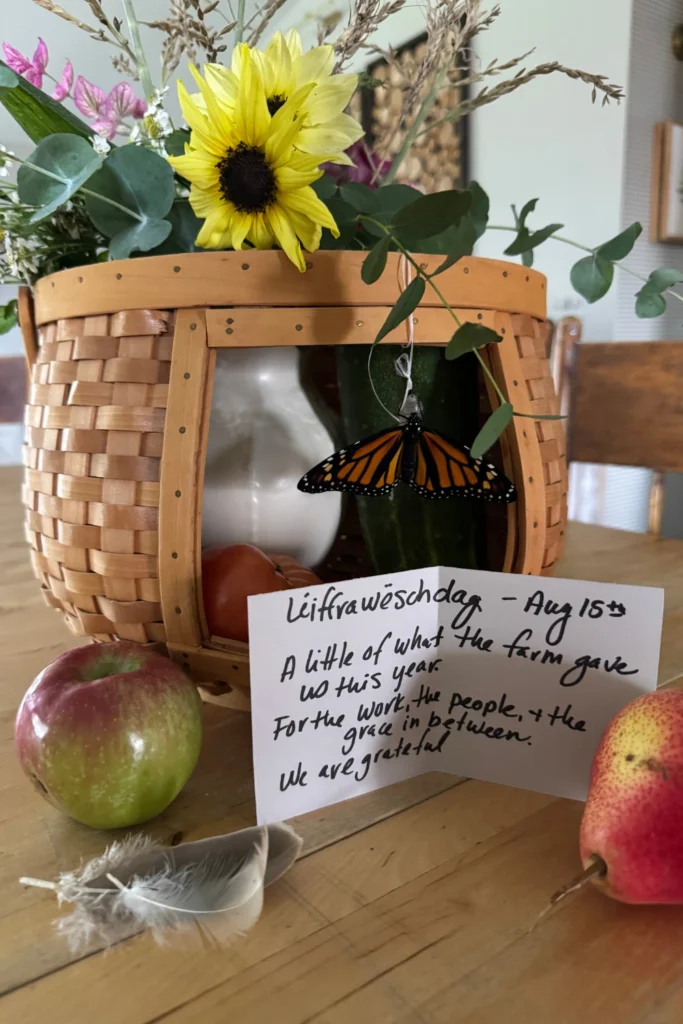
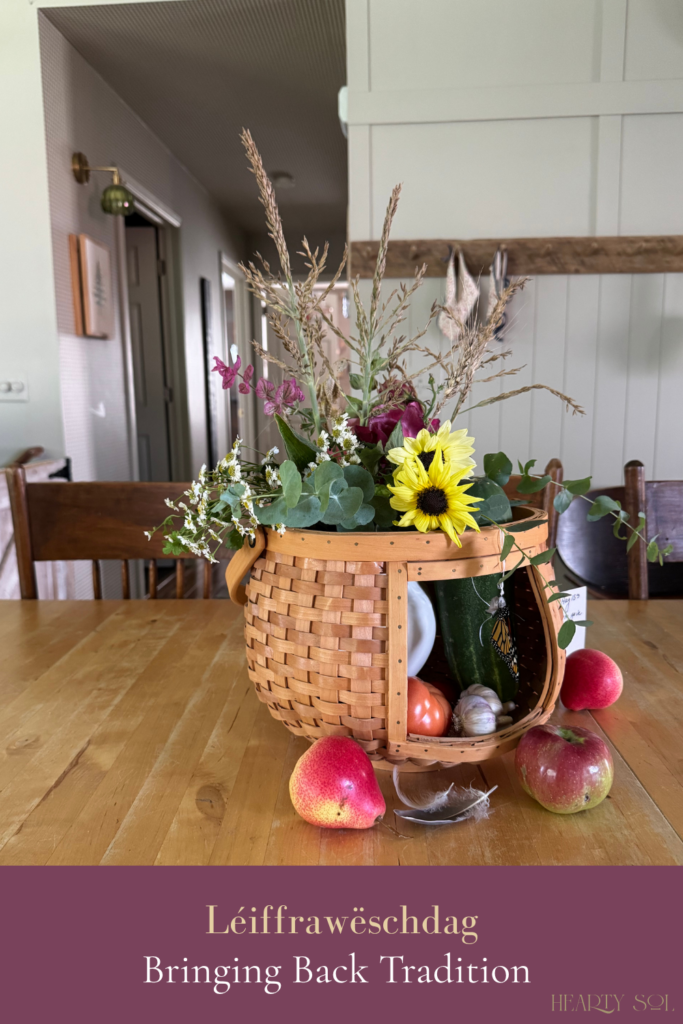
We’re not trying to recreate exactly what our ancestors did, and we certainly aren’t pretending that our lives look much like theirs did. Instead, we gathered a few things from our own garden and farm—a little produce, some flowers, garlic from this year’s harvest and some lavender—and put them together in a basket on our kitchen table.
It’s a small thing, but I love seeing it there.
Every time I walk past that basket, I’m reminded to stop and be grateful for another year. Not necessarily a perfect year. There have certainly been ups and downs, hard days and unexpected turns, just as there always are. But another year of doing what we love. Another year of working the land, growing things, caring for animals, raising our family and making a life here that we truly cherish.
I think that may be what I love most about Léiffrawëschdag.
It isn’t a tradition built around pretending that everything is perfect. It came from people who understood better than most that a harvest was never guaranteed. They knew what it meant to work hard and still have to depend on weather, soil, seasons and things beyond their control. And so, in the middle of August, they gathered what they had and gave thanks for it.
There is something deeply grounding about that.
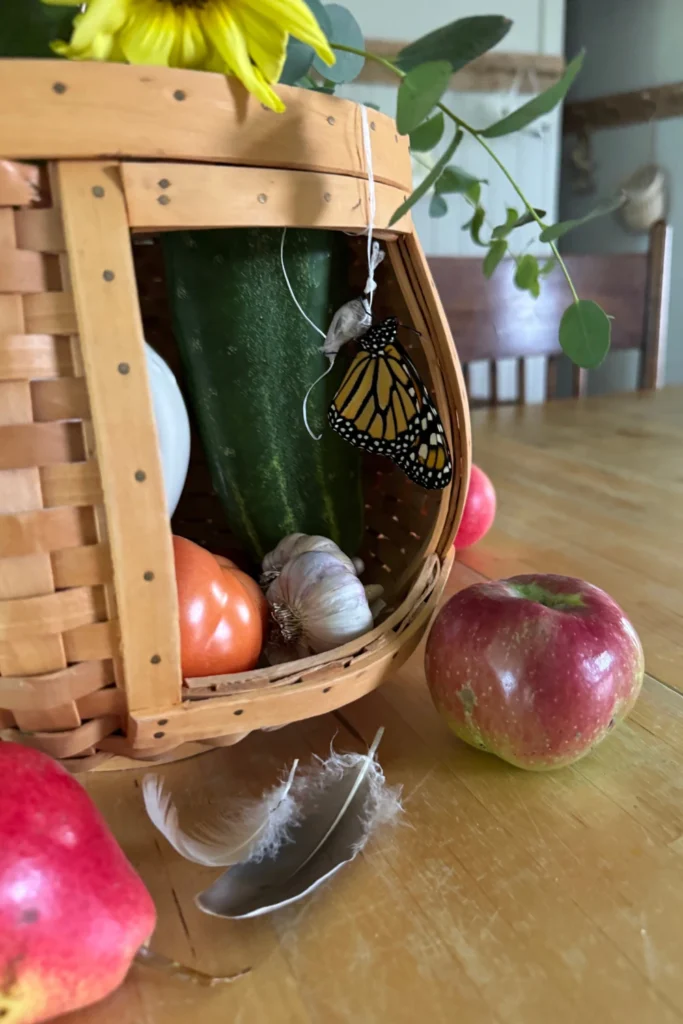
Our little basket isn’t fancy. It doesn’t need to be. Each one of our family members has brought it the thing they contributed to or admired on our farm this year. For some it was their popcorn, sunflowers, lavendar, garlic, our flowers, and even our youngest with her monarch caterpillars. It sits right there in the middle of our kitchen, where we can see it every day.
And for us, it is a little reminder that another year has come and gone, with all of its ups and downs, and we have been given another harvest. Another year of doing the work we love. Another year of caring for this place and the people in it. Another year of gathering what the good Lord has seen fit to give us.
That feels worth celebrating.
And worth remembering.
A Luxembourg Minute
Although many old traditions have faded with time, Léiffrawëschdag remains part of Luxembourg’s heritage. In some of Luxembourg’s rural villages, the tradition of blessing the Wësch continues on August 15th. The details may have changed over the years, but the heart of it remains remarkably familiar: faith, gratitude, harvest and tradition, all gathered together.
When I think back to those farm neighbors in Rollingstone carrying their bundles into church, I realize now that they were doing more than bringing a few armfuls of the garden inside. They were carrying a little bit of their farms, their families and their hopes for the year ahead with them. They were continuing something that had been carried across generations and across an ocean, and they were making it part of life here in Minnesota.
I wish I could go back and tell that little girl watching from her church pew what she was seeing. I wish I could tell her that someday she would understand how special it was to grow up surrounded by people who still carried pieces of an old tradition forward without making a big fuss about it. They simply did it because that was what their families had done before them.
And now, in our own small way, we are doing it too.


Photos from our trip to Luxembourg
The Assumption Harvest Festival
The village of Greiveldange is known for its annual Assumption Day fest. It’s nestled near the Moselle River and is home to just under 1,000 citizens. It also happens to be the town where my family lineage traces back to!
A few summers back, my family and I had the privilege of traveling Luxembourg and retracing our ancestors steps. It was a meaningful trip and encouraged us to lean into the traditions that make up our family history. We also gained Dual Citizenship and did you know that Minnesota is home to the most Luxembourg-American Dual Citizens in the country? There are almost 2,500 people living in Minnesota living with Dual Citizenships. Pretty cool!
Read about our travels here
Pin for Later!
Closing Thoughts
We live in a time when it is easy to move right past the things we have worked so hard for. The garden produces, and we’re already thinking about the next thing. The garlic is harvested, and we’re thinking about planting next year’s crop. Summer is still here, but the school calendar is already on the refrigerator. There is always another project, another load of laundry, another email, another thing that needs doing.
So I like the idea of a basket on the kitchen table that simply reminds me to look at what we have.
Look at the flowers. Look at the vegetables. Look at the garlic we grew. Look at the lavender that will fill the house with its smell when we brush past it. Look at this year’s harvest. Look at the people around the table. Look at the life we have been given. Be grateful.
Have a great week, friend!
Savoring Late Summer

Affiliate Disclosure & Content Disclaimer
This post may contain affiliate links from a paid sponsor, Amazon or other program. When you use these links to make a purchase I earn a small commission at no extra cost to you. This allows me to continue creating the content that you love. The content in this article is created for information only and based on my research and/or opinion.
Emily T.



DAILY INSPIRATION ON THE GRAM @hearty.sol
it's hip to be square!
View comments
+ Leave a comment