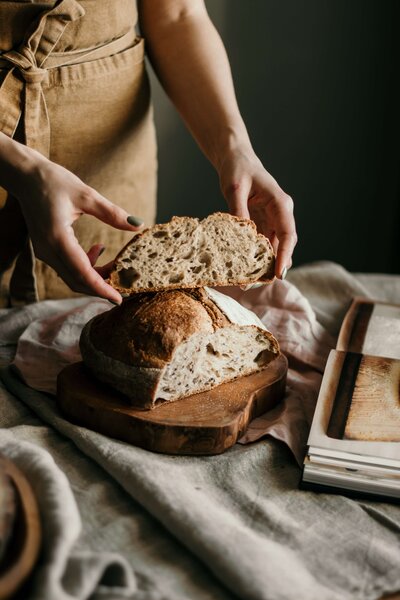

A Year in the Life of Our Garlic Patch: From One Clove to A Year’s Worth of Flavor
A breakdown of our garlic season to season: A crop that takes it’s time, and we’re grateful for it.
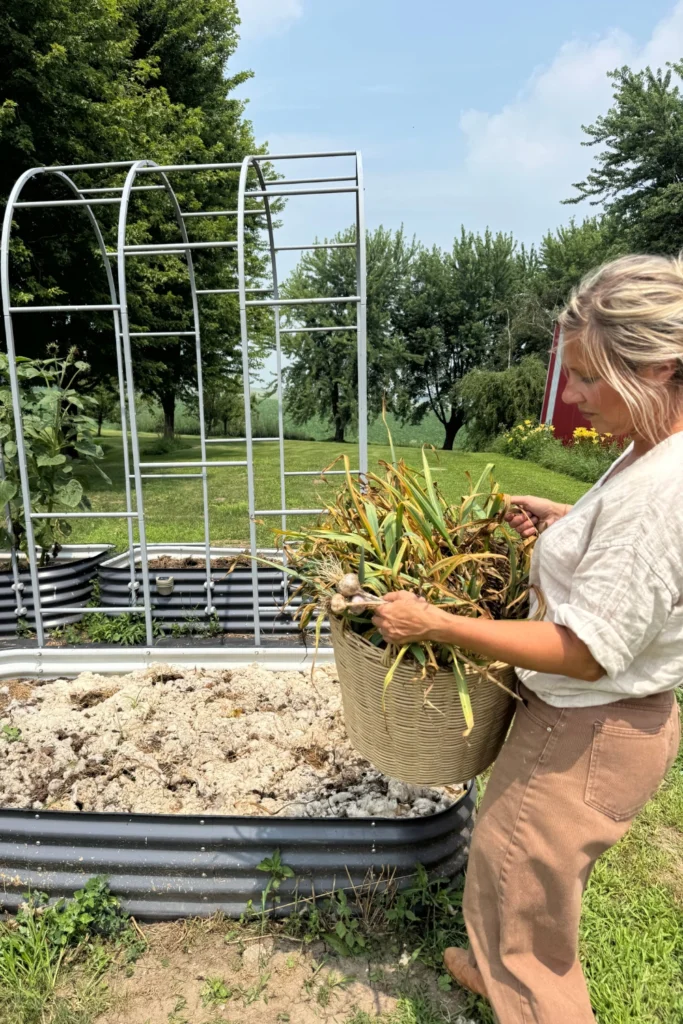
Garlic Season to Season
Every fall, when most of the garden is winding down and the last tomatoes are being picked, we start thinking about next year’s garlic.
It always feels a little backwards.
The garden is tired. The days are getting shorter. The air has a chill to it. Most of the plants are finishing their season, and we’re beginning to clean things up for winter.
And then we tuck hundreds of small garlic cloves into the ground.
There is no harvest for months.
No immediate reward.
No way to see what is happening beneath the soil.
Just a tiny clove, a little dirt, and the hope that someday those small pieces will become something much bigger.
That might be my favorite thing about growing garlic.
It requires patience.
It reminds us that good things often take time.
And by the time we pull those garlic bulbs from the ground the following summer, that one small clove has become something that will flavor our meals for an entire year.
- Fall
- Winter
- Spring
- Garlic Scapes and what to do with them
- Summer
- Curing Garlic
- What we use our Garlic for
- How much Garlic should I plant? + other FAQ’s
- Pin for Later
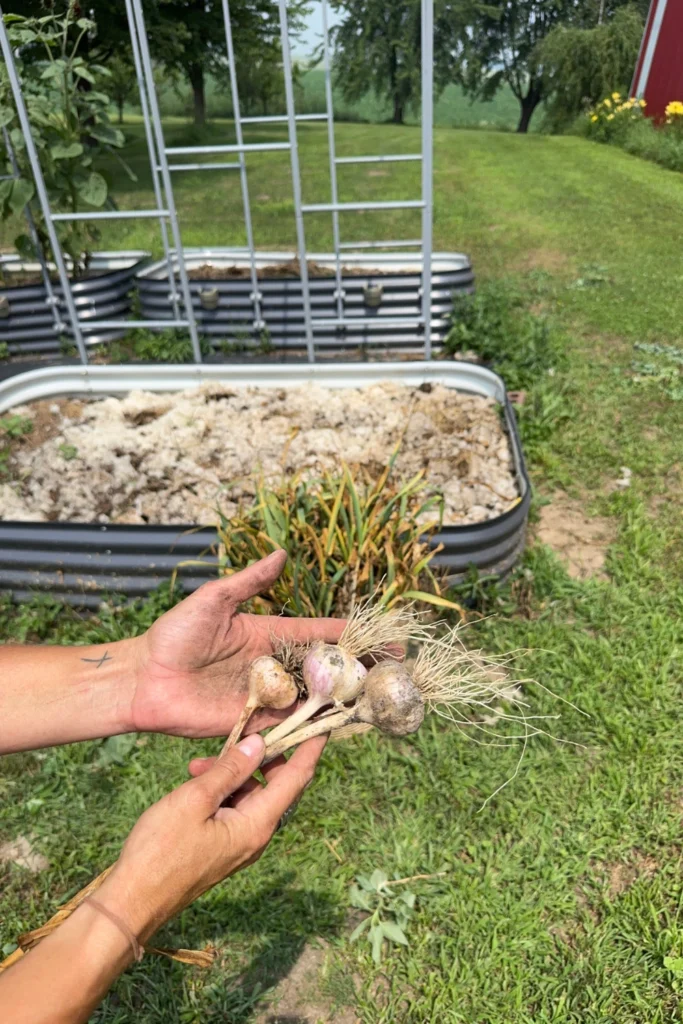
Fall: Planting the Garlic Patch
Garlic is one of those crops that feels a little like a gift you give yourself. A surprise for Spring.
We plant in the fall, after the heat of summer has passed and the garden is beginning to settle in.
Instead of buying new garlic bulbs each year, we save some of our best bulbs from the previous harvest to plant again. Each bulb is carefully broken apart into individual cloves and each clove has the potential to become a whole new bulb.
How we Plant Garlic in the Fall
It still amazes me every year.
One little clove becomes one beautiful head of garlic.
We choose our largest, healthiest cloves for planting because the size of the clove often helps determine the size of the bulb we harvest the following summer.
Once planted, we cover the garlic patch with dirt and mulch and wait.
The garlic begins growing roots before winter arrives, settling in beneath the soil while everything above ground slows down.
Winter: The Garlic Sleeps Beneath the Snow
There is something comforting about knowing that even when the garden looks completely finished, there is still life happening beneath the surface.
The garlic patch doesn’t look like much through the winter months.
There is no visible growth.
No sign that anything is happening.
But underneath the soil, roots are quietly developing and preparing for spring.
I think there is a beautiful lesson in that.
Some of the best things are happening long before we can see the results.
Fermented Honey Garlic
While our planted garlic is working towards new growth, we use our stored garlic to make an immune-boosting concoction that lasts us all winter long.
When fermented with honey, garlic becomes a beneficial remedy during flu season.


Spring: Watching the Garlic Return
When the snow melts and the garden begins waking up again, those little green garlic shoots are some of the first signs that a new growing season has arrived.
Garlic is one of those crops that feels especially rewarding because it doesn’t require constant attention.
It quietly grows while we are busy planting other things, tending flowers, caring for animals, and preparing for the abundance of summer.
Of course, like any garden crop, it still needs a little care.
Keeping weeds under control and giving it the space it needs helps those bulbs grow strong.
And then comes one of our favorite parts of growing garlic…
The Garlic Scape Surprise
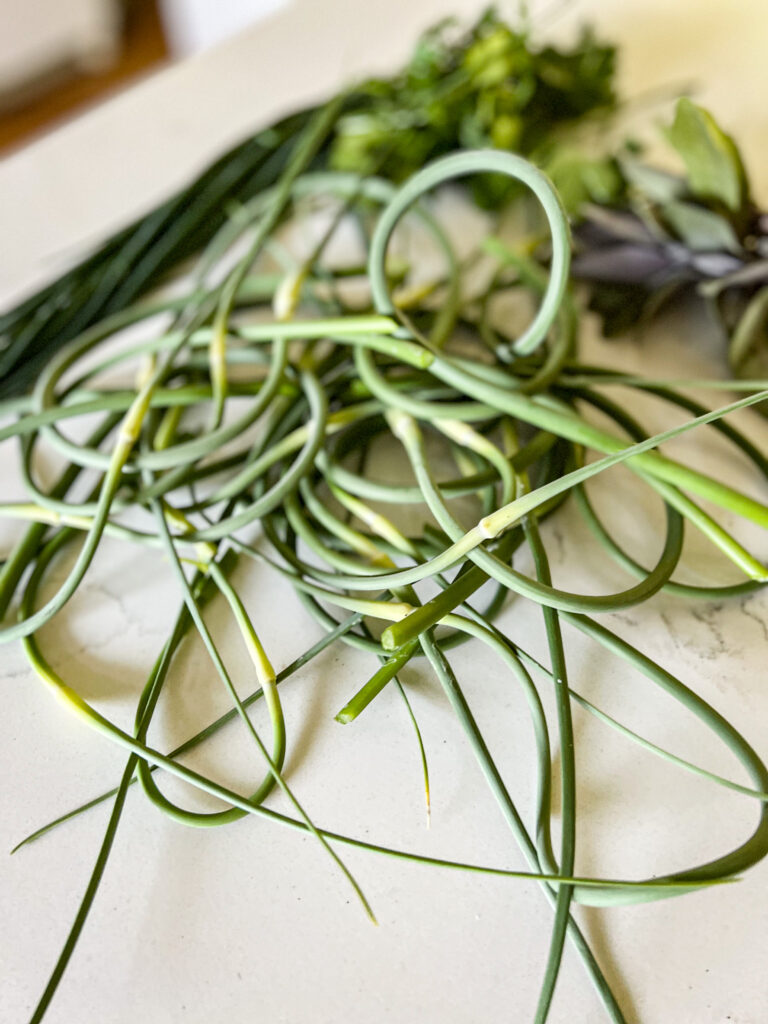
Before the garlic bulb is ready to harvest, the plant sends up a curly green flower stalk called a scape.
And honestly, the scapes might be one of the best surprises of growing garlic.
They are a harvest all on their own.
We cut them from the tops of the garlic plants, usually sometime in June, because removing the scape encourages the plant to put more energy into growing a larger bulb underground.
But what started as a gardening task quickly became one of our favorite ingredients.
Garlic scapes have a mild garlic flavor and can be used in so many ways.
We blend them into pesto, chop them into recipes, and make our favorite Garlic Scape Compound Butter.
Garlic Scape Compound Butter Recipe
It is one more example of how gardening often gives us more than we expected.
Summer: Harvesting What We Planted Months Ago
Eventually, the waiting is over.
The leaves begin to change, and we know harvest time is approaching.
There is something incredibly satisfying about pulling garlic from the soil.
For months, we’ve been caring for something we couldn’t fully see.
And then suddenly, there it is.
A full bulb of garlic where there was once only a single clove.
This is one of my favorite moments in the garden.
Not because garlic is the biggest or most impressive crop we grow, but because it represents the entire process of gardening.
The waiting.
The patience.
The trust that something is happening even when we can’t see it.
When and How We Harvest Garlic
Curing Garlic for the Year Ahead
Freshly harvested garlic needs time to cure before it is ready for long-term storage.
During this process, the outer layers dry down, the flavor develops, and the bulbs prepare to carry us through the coming seasons.
We hang our garlic to cure and love having those beautiful braids and bundles around the farm.
There is something special about seeing food that we grew become part of our home.
Not just stored away in a cupboard, but displayed as a reminder of the work and seasons that brought it there.
How We Braid Garlic for Storage


Preserving Garlic for Year-Round Cooking
The best part about growing garlic is that the harvest doesn’t end when we pull it from the ground.
With proper storage and preservation, one summer harvest can flavor meals for months.
Here are a few of our favorite ways to enjoy our garlic all year long:
1. Homemade Garlic Butter
This might be one of our favorite ways to preserve the fresh garlic flavor.
A scoop of garlic butter makes almost anything better:
- warm bread
- roasted vegetables
- steak
- potatoes
- pasta
- garden vegetables
2. Homemade Minced Garlic
Minced garlic is one of those pantry staples we reach for constantly.
It is simple, convenient, and adds so much flavor to everyday meals.
We use it in seasoning blends, soups, sauces, and just about anything that needs a little extra garlic.
For this process, peel and mince garlic. Then add olive oil and store.
3. Homemade Garlic Powder
This is one of those ingredients we use often and I love knowing it came straight from our garden
To make garlic powder at home, simply ground up dehydrated garlic cloves. 1 clove = 1/8 tsp.
How We Make Homemade Garlic Powder
How Much Garlic Do We Grow?
One of the most common questions we get is how much garlic we actually plant.
The number of cloves depends on how much garlic your family uses, but for us, we like growing enough that we don’t have to think about buying garlic throughout the year, plus a few braids to make for the market.
We plant enough to:
- use fresh throughout the season
- preserve for later
- save the best bulbs for next year’s planting
There is something incredibly satisfying about closing the loop and saving a piece of this year’s harvest to begin the next one.
Questions about Caring for Garlic Season to Season
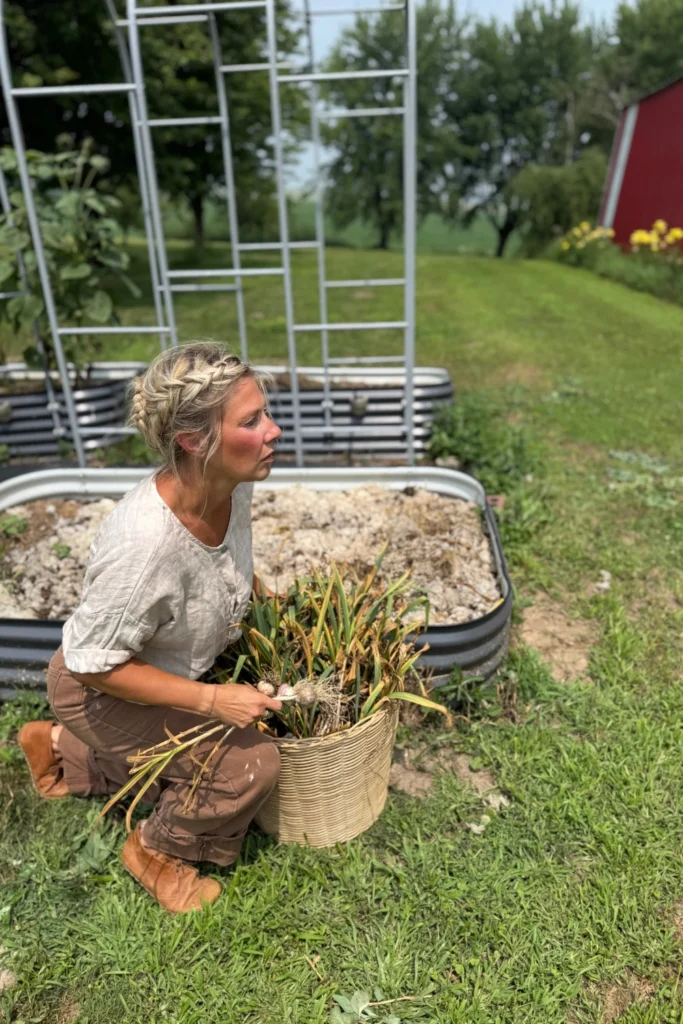
We have a garden bed specifically designated for the garlic bulbs. I prefer a raised bed for garlic because it offers more forgiving soil that provides drainage.
Here in zone 4b, and for my most of my fellow Midwesterners, harvest time is mid to late July. This will vary depending on what state and climate you live in. If you’re curious, I’ve broken it down here
With temps in Minnesota reaching 19 below this past winter, it’s a good question. Garlic actually requires a period of “vernalization,” a period of prolonged exposure to cold temperatures which allows for proper growth.
Yes and bulb size, leaf condition, and skin condition will all tell you when your garlic is ready to be harvested. I always look for browning of the lower stems.
Why We Keep Growing Garlic Year After Year
Garlic is not the flashiest crop in our garden.
It doesn’t grow quickly.
It doesn’t give instant gratification.
But maybe that’s exactly why we love it.
Growing garlic reminds us that good things take time.
That a tiny seed—or in this case, a tiny clove—can become something that feeds our family for an entire year.
Every time I pull a bulb from our pantry or chop fresh garlic into a meal, I think about the journey it took to get there. The growth of garlic season to season.
The planting in the cold fall soil.
The waiting through winter.
The first green shoots of spring.
The summer harvest.
The preserving.
The meals shared around our table.
A year’s worth of flavor started with one small clove.
And that feels pretty amazing.
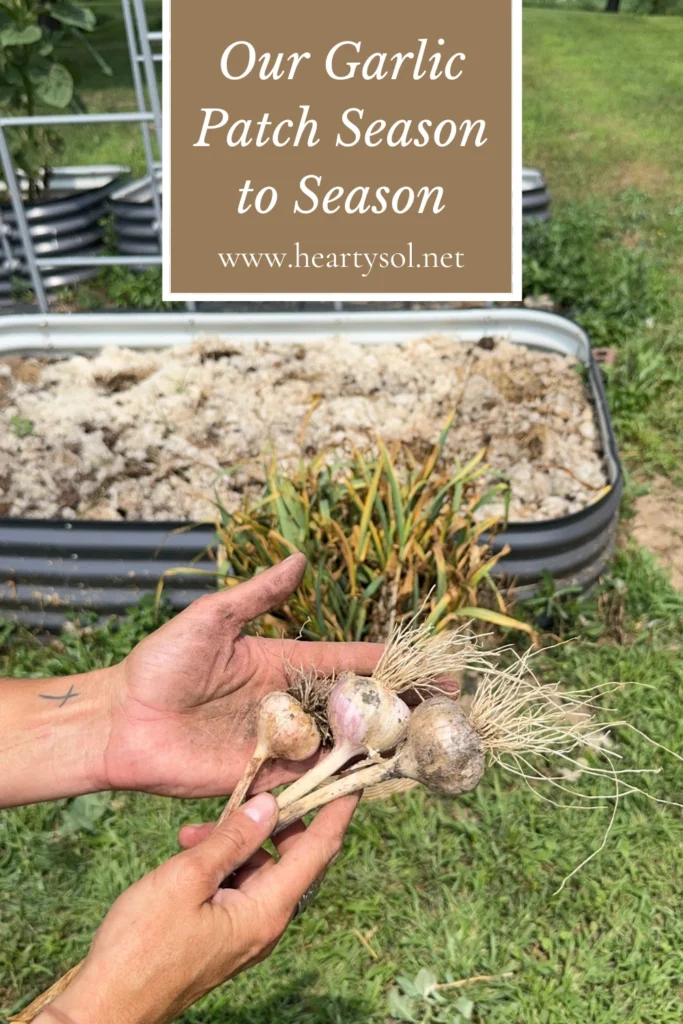
Pin for Later
More from the Farm
- The Sweet Spot of Summer: 7 Farmhouse Rituals that Slow you Down and Fill You Up
- Cottage Cheese Brûlée
- How to Cut and Process Dahlias

Affiliate Disclosure & Content Disclaimer
This post may contain affiliate links from a paid sponsor, Amazon or other program. When you use these links to make a purchase I earn a small commission at no extra cost to you. This allows me to continue creating the content that you love. The content in this article is created for information only and based on my research and/or opinion.
Emily T.


DAILY INSPIRATION ON THE GRAM @hearty.sol
it's hip to be square!
View comments
+ Leave a comment