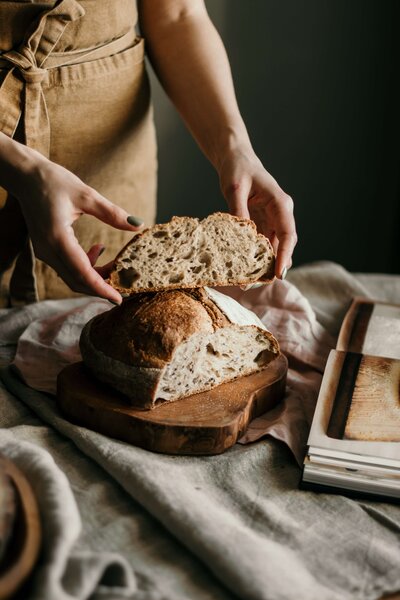

Preparing to Weave with Willow: From Living Branches to Basket
Willow basket weaving begins years before your hands ever touch a rod. For an inside look into growing, harvesting, soaking, and drying willow to use in your projects, you’ve come to the right place.
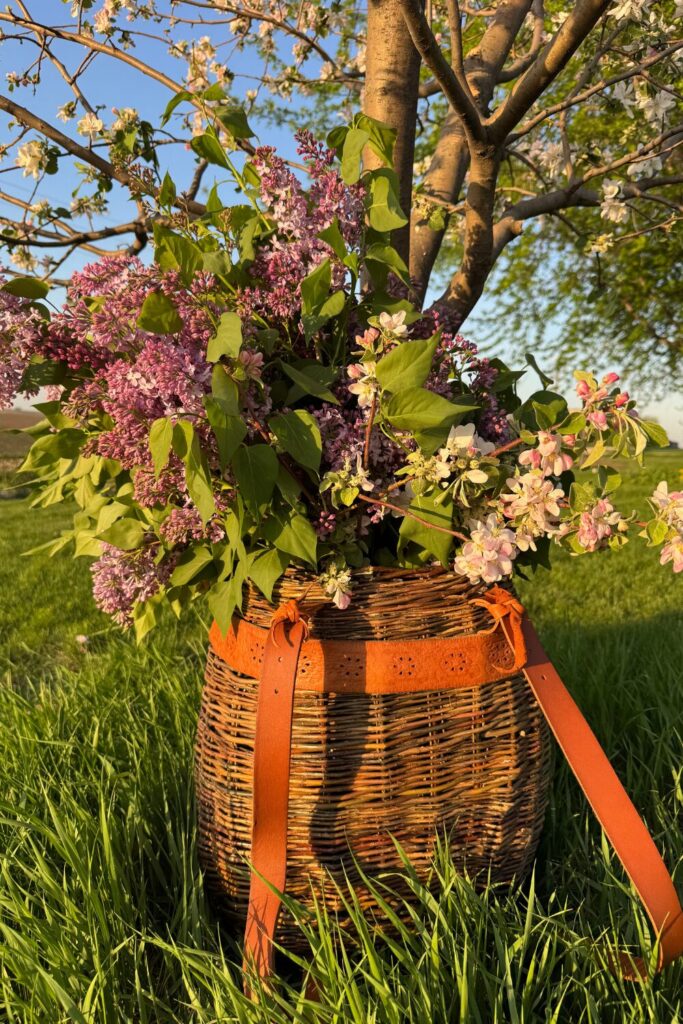
The work of preparing Willow
There is a particular kind of quiet that lives in a willow rod.
In early spring, they look like nothing more than short sticks pressed into the ground. No leaves, no drama, no announcement of what they will become.
But a willow basket does not begin in a workshop.
It begins in a field — years earlier — in rows of patient, unremarkable growth.
Most people see the finished basket and assume it was made in an afternoon. Few realize it was grown in winters, cut in cold air, and dried in rafters long before weaving ever began.
Willow weaving is agriculture first. Craft second.
And that matters.
- How do I select the right type of willow for weaving projects?
- How long before you can harvest willow?
- Harvesting willow in Winter
- Sorting and sizing willow for the right projects
- The initial dry
- Soaking: Rehydrating your willow
- Mellowing: The overlooked step
- Weaving with Willow
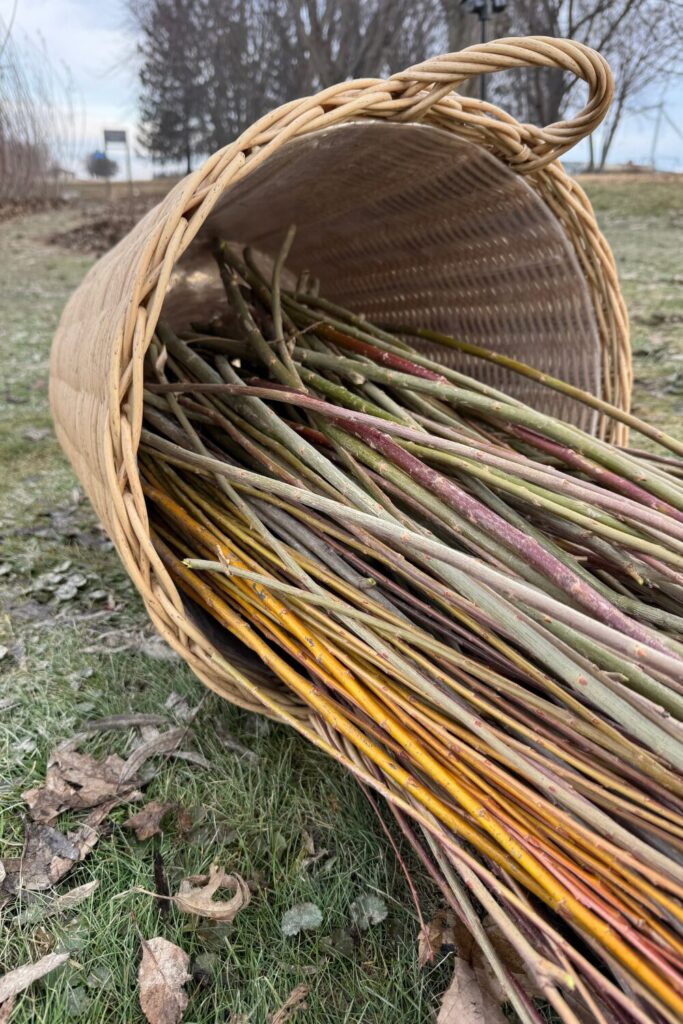
Choosing the Right Willow
Not all willow is suitable for weaving. Some varieties branch too wildly, some grow brittle, some twist and bend in ways that fight the hand.
Basket makers look for straight, flexible, annual rods. While there are many different types of willow, varieties like Salix viminalis, Salix purpurea, and Salix triandra have long been favored because they produce slender, strong growth that can be coaxed into form without splitting.
Basket willow is grown differently than ornamental willow. It is planted densely and managed through a practice called coppicing — cutting it back to the base each winter so it sends up long, straight willow shoots the following year.
It is a renewable system. A humble one. A disciplined one.
How Long Before You Can Harvest?
Willow teaches patience quickly.
The first year after planting cuttings — usually 8–10 inches of dormant rod pressed directly into soil in early spring — growth is establishing itself underground. Roots are forming. Energy is being stored.
By the second year, you may see usable rods. But they are often shorter, less consistent.
It is usually by the third growing season that strong, long weaving rods begin to appear — four, six, sometimes eight feet of straight annual growth, depending on soil and rainfall.
Nothing about this process is hurried.
Each winter, the rods are cut back to the stool — the base of the plant — and the cycle begins again. Growth. Dormancy. Cutting. Regrowth.
Year after year.
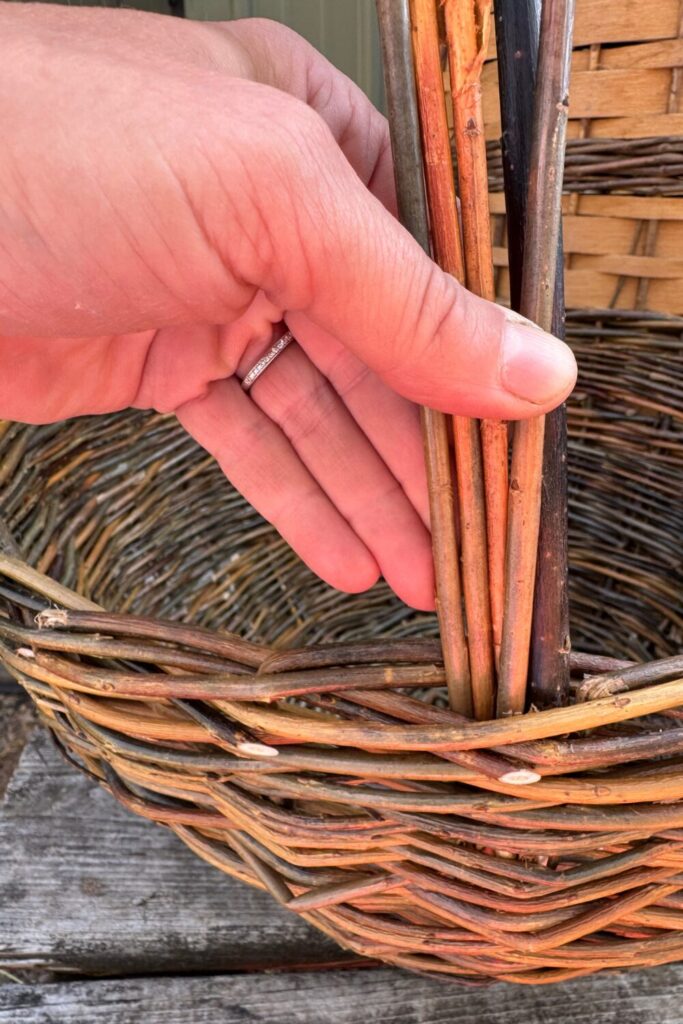
Harvesting in Winter
Willow for weaving is harvested after the leaves fall and before sap rises again in spring. In colder climates, this often means late fall through the heart of winter.
The rods are dormant then.
They cut cleanly, they store well, they hold their integrity.
Harvesting during active growth introduces excess moisture and later shrinkage. Winter cutting produces stability.
There is something deeply fitting about gathering weaving material when the world itself feels pared back.
Watch here: https://www.instagram.com/reels/DFjG3uwPOTW
Sorting and Sizing: The Work Before the Work
After cutting, the rods are not immediately woven.
The freshly cut willow needs to be sorted.
First by length. Then by thickness at the butt end.
Fine rods are set aside for delicate weaving. Medium rods for structural walls. Thick rods for stakes — the bones of a basket.
This step cannot be skipped without consequence.
A basket fails not because of artistry, but because of poor selection. Rods that are mismatched in thickness or tension create uneven pressure. The structure weakens.
Willow teaches respect for gradation.
It asks you to notice subtle differences and honor them.
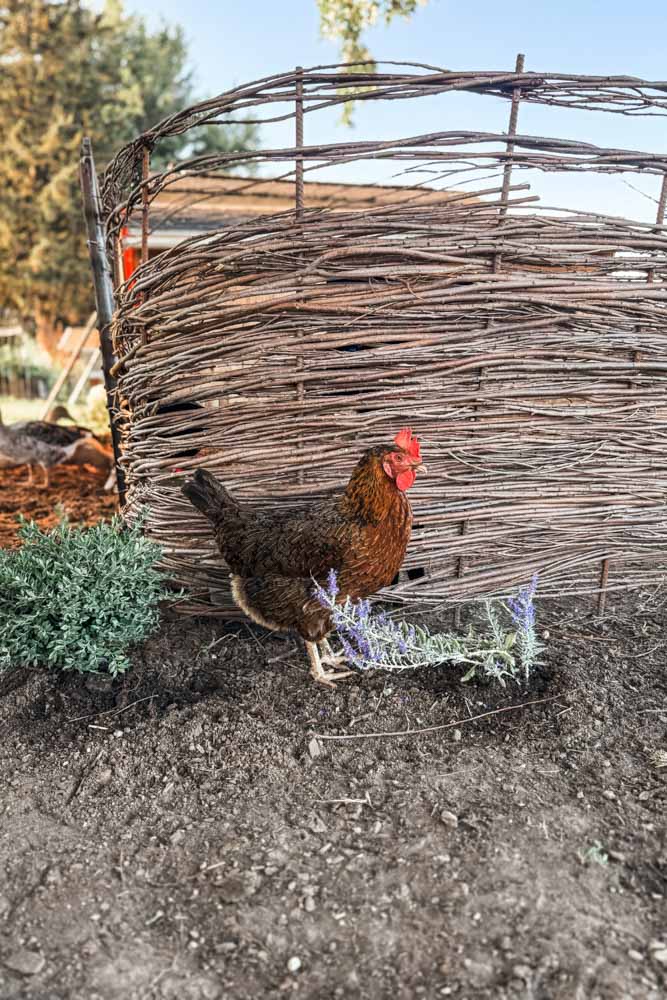
Our birds now get to enjoy the rustic privacy of a sturdy willow fence 🙂 Learn about my process here
Drying: The Season of Stillness
If willow is not woven green, it must dry completely.
Bundles are tied and stood upright in an airy, protected place — a shed, a barn, a dry corner of a workshop. They must be shielded from rain and allowed good air circulation.
Over weeks, sometimes months, the rods harden. They become stiff. Unyielding. Seemingly unusable.
And then they wait.
Properly dried willow can sit for a year or more.
There is no urgency in this material.
It keeps.
Soaking: Bringing It Back to Life
Before weaving, dried willow must be rehydrated by soaking.
The rods are fully submerged in water — often for several days. A common rhythm is roughly one day of soaking per foot of rod length, though weather and dryness influence the timing.
Cold water works. No additives are needed.
Slowly, the fibers drink.
I built this willow trough last summer and it works perfectly for soaking all of my harvested willow.
The bark darkens slightly. The rods begin to soften.
But soaking alone is not enough.
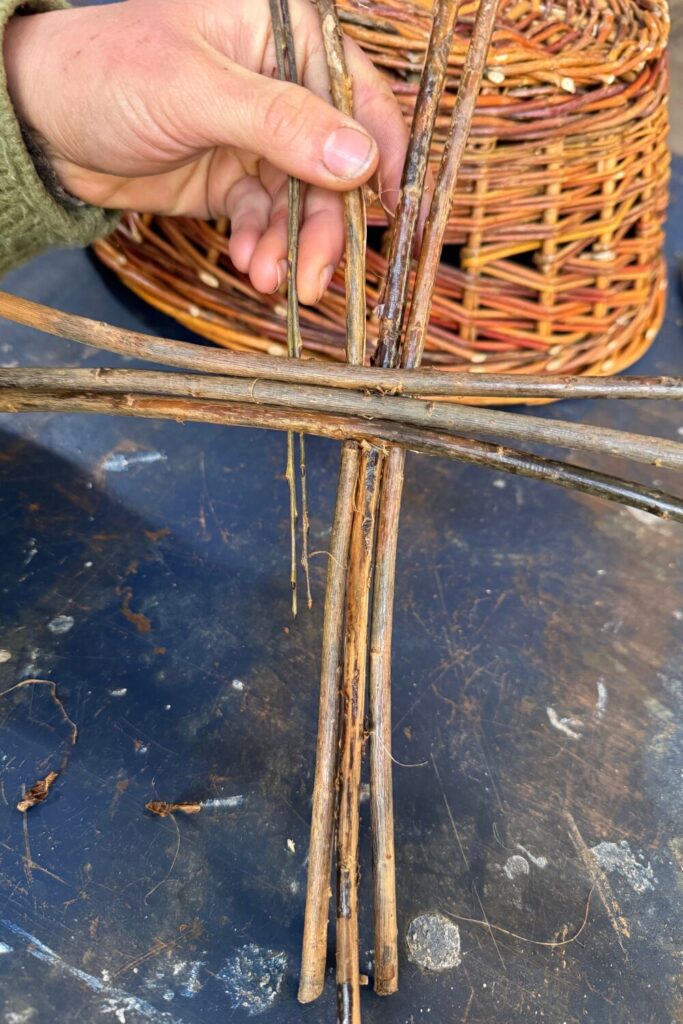
Mellowing: The Overlooked Discipline
After soaking, the rods are removed from water and wrapped in damp cloth or plastic to rest for 24–48 hours.
This step is called mellowing.
Moisture equalizes from the outer bark into the core. Tension evens out.
If you skip mellowing, the outer layer may feel pliable while the inner core remains dry. Rods crack under pressure. Frustration follows.
Mellowing is quiet work.
You have already waited years for growth, months for drying, days for soaking — and still, you wait again.
There is wisdom in that restraint.
Finally, Weaving
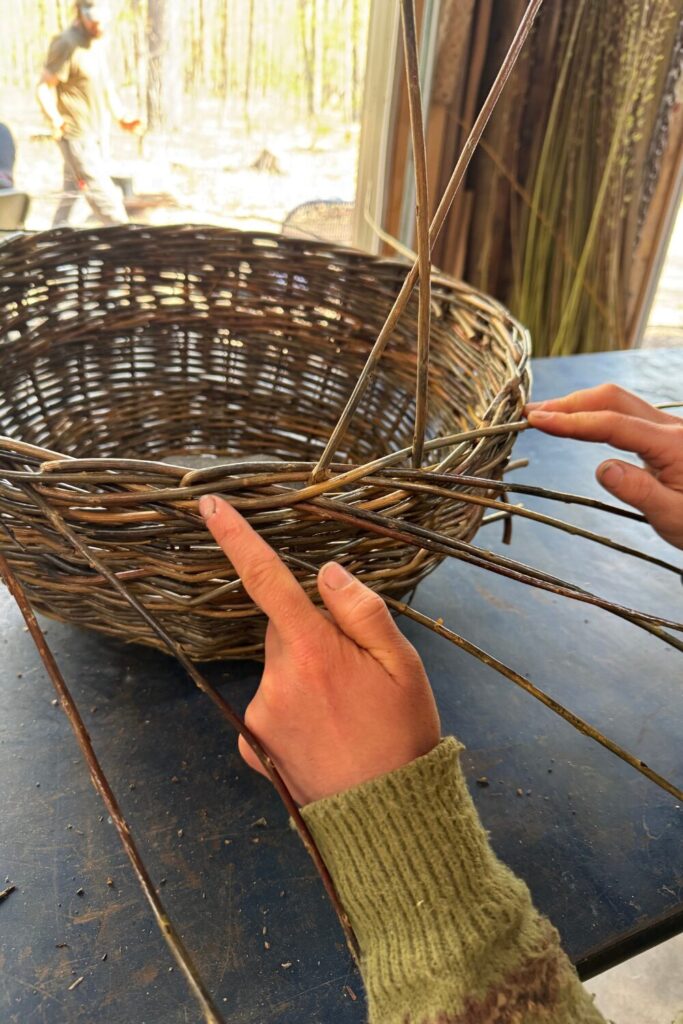
Only after all of this does weaving begin.
The stakes are set. The weavers are chosen carefully from sorted bundles.
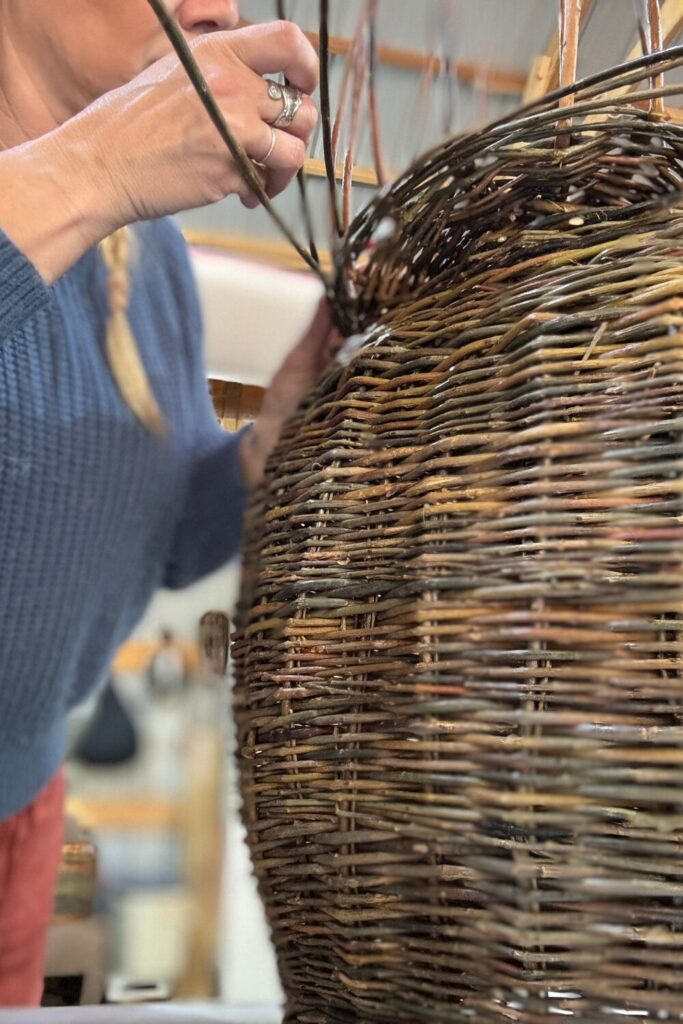
The rods bend without snapping. Fibers compress and hold tension against one another. Form emerges from repetition and pressure and patient hands.
By the time you begin weaving, the willow has already done most of the work.
It has grown through wind and sun.
It has been cut in winter.
It has dried in stillness.
It has soaked and mellowed and softened again.
The weaving is simply the final shaping.
What Willow Teaches
A willow basket is not made in an afternoon.
It is grown in seasons.
It reminds us that useful things take time. That preparation is often invisible. That structure matters more than decoration. That patience is not passive — it is active cultivation.
Perhaps that is why weaving feels grounding.
You are not just making something.
You are participating in a rhythm that began years earlier in a row of quiet sticks in the soil.
And that kind of work feels honest.
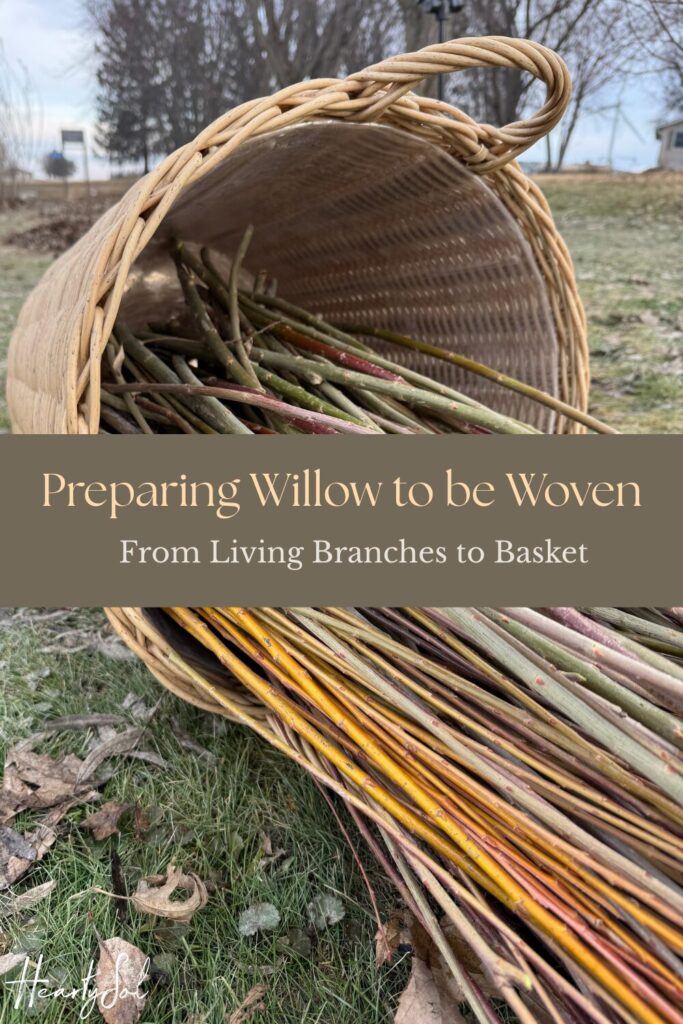
Pin for Later!
More Handcrafted Projects

Affiliate Disclosure & Content Disclaimer
This post may contain affiliate links from a paid sponsor, Amazon or other program. When you use these links to make a purchase I earn a small commission at no extra cost to you. This allows me to continue creating the content that you love. The content in this article is created for information only and based on my research and/or opinion.
Emily T.



DAILY INSPIRATION ON THE GRAM @hearty.sol
it's hip to be square!
View comments
+ Leave a comment