
The Lost Art of Waiting: Raising Resilient Kids in a World of Instant Gratification
Why delayed gratification, boredom, and anticipation still matter for children
There’s a high school not far from us where kids walk through the doors each morning carrying iced coffees with cold foam and breakfast sandwiches delivered straight to the office from DoorDash.
And every time I see it, I find myself thinking less about the coffee itself and more about how quickly treats stop feeling like treats.
Because somewhere along the way, so many of the small things that once felt occasional have quietly become daily expectations.
A coffee on the way to school. A package on the porch. A “little something” after every practice or errand or hard day. Food arriving at the tap of a screen before anyone has even had time to feel hungry.
What’s being built here is the expectation of instant gratification.
- Delayed gratification does not equal discipline
- Navigating a world where fewer things feel special
- Anticipation and happiness
- Why summer is a good season to start practicing delayed gratification
- Resilience, not perfection
The Gift of “Not Yet”
To be clear, this isn’t written from some lofty place of having parenting figured out. I am raising children in the exact same culture. I have absolutely been the tired mother handing over snacks and saying yes simply because I did not have the energy for resistance that day.
Modern parenting asks a tremendous amount of families. Convenience often enters quietly, not from laziness, but from exhaustion.
Still, I find myself wondering what all this immediacy may be doing to our children over time.
Not in some grand dramatic sense. Just ordinary waiting.
Waiting for Friday pizza night. Waiting for fair week. Waiting to save enough money for the shoes they wanted. Waiting for strawberries to finally ripen in the garden. Waiting for the ducks to hatch in the incubator and checking them every morning before breakfast. Waiting for Grandma’s cinnamon rolls after church.
Part of the joy used to live inside the anticipation itself.
And now so much of childhood feels immediate.
The snack before the meal. The purchase before the wanting has even settled in fully. The reward before the effort. The dopamine hit before boredom has had a chance to work its strange and wonderful magic.
I think we may be underestimating what boredom, waiting, longing, and anticipation actually build inside a child.
Not just gratitude.
Resilience.
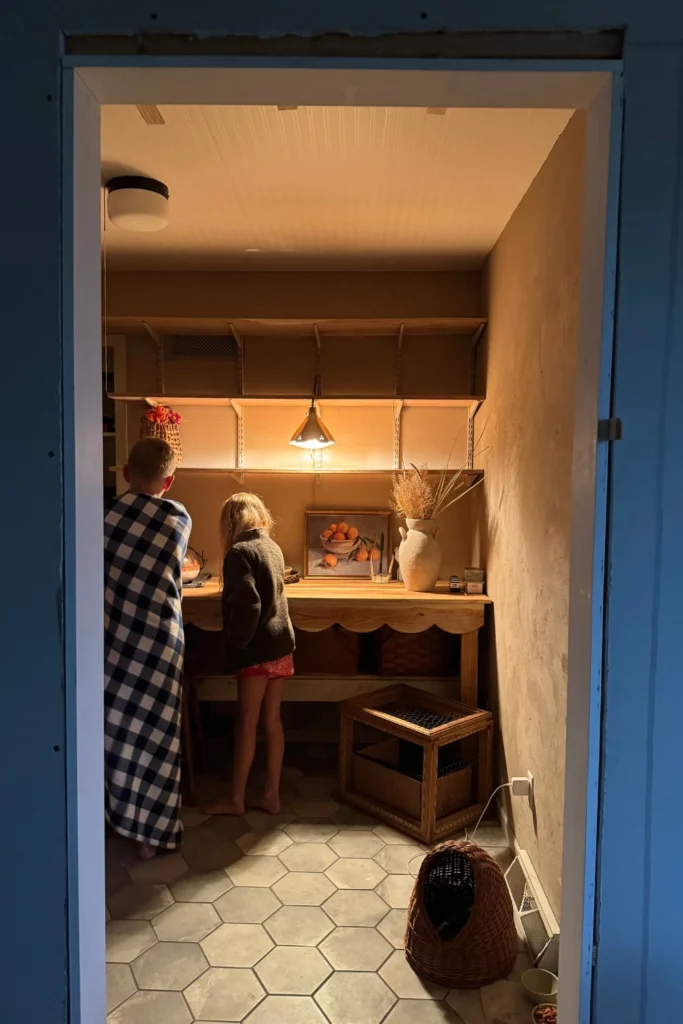
As our kids start reaching larger milestones like driver’s tests and college tours, this season of life has brought about more reflection. I’ve shared more in my recent post raising teens and letting go.
Delayed Gratification Is About More Than Discipline
Research around delayed gratification continues to show that the ability to tolerate waiting, discomfort, and anticipation is closely tied to emotional regulation, resilience, and long-term well-being.
Not because children need harshness or deprivation.
But because learning to hear “not yet” builds something important inside the developing brain. Something that challenges every immediate reward – overcoming instant gratification.
The ability to pause. The ability to tolerate discomfort without immediately escaping it. The understanding that some things are worth working toward and waiting for.
Like any muscle, this weakens when it is rarely used.
How to teach delayed gratification? Children slowly learn that they can survive disappointment. That boredom is not an emergency (more of my thoughts on this here). That wanting something does not mean they must immediately have it.
And honestly, these life skills and willpower are something adults need too.
Because eventually those same muscles become perseverance in marriage, steadiness during hardship, discipline with money, commitment to meaningful work, and the ability to remain grounded when life feels uncomfortable.
We are not simply raising children.
We are raising future adults.
Building habits that will help them in the long run, allowing them to learn that life is pleasure-pain, not just pleasure.
Why Nothing Feels Special Anymore
How does instant gratification impact mental health and well-being?
There’s another psychological concept that feels important here: hedonic adaptation.
Humans adapt surprisingly quickly to comfort, convenience, novelty, and reward.
The first Starbucks drink feels exciting. By the twentieth one, it feels ordinary.
The first spontaneous ice cream stop feels memorable. If it happens every afternoon, the emotional impact slowly fades.
This is not because children are ungrateful.
It is because the nervous system adapts.
Which means more treats do not necessarily create more happiness. Often, they simply raise the baseline of expectation. An expectation of immediate pleasure.
And eventually, ordinary life starts feeling underwhelming.
I sometimes wonder if part of what many parents are sensing right now is not that children have become “spoiled,” but that modern life has removed so much anticipation from childhood.
So much now arrives instantly. Movies. Food. Shopping. Entertainment. Answers. Dopamine.
And while convenience certainly has its place, I do not think human beings were meant to live entirely without longing.
Because longing creates appreciation.
Waiting creates emotional depth.
Anticipation creates memory.


Analog living is something I’ve been tapping into for a while now, and I’ve found that it helps me pause and focus during even the busiest days – read more here
Anticipation Is Part of Happiness
I think many of us grew up understanding this without even realizing it.
Part of the joy was the looking forward.
The countdown to vacation. The birthday dinner. The first watermelon of summer. The Christmas catalog arriving in the mailbox. The yearly trip to the drive-in theater. The new school shoes in August.
The anticipation and delay of gratification stretched happiness across days and weeks.
Children once lived closer to the rhythm of waiting.
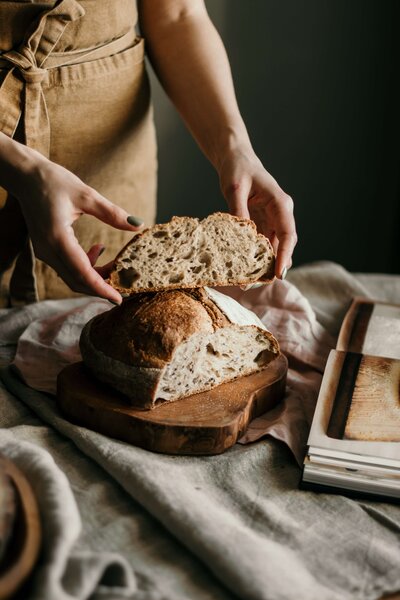
Seeds took time. Bread had to rise. Film had to be developed. Baby animals arrived in their own timing. You waited for tomatoes to ripen and fireflies to appear and the pool to feel warm enough to swim in finally.
Even now, some of the sweetest moments on our farm happen inside the waiting itself.
The greatest reward comes from checking the incubator each morning for signs the duck eggs are beginning to hatch. Watching children count down until fair week. Walking through the garden each evening to see if the strawberries are finally ready.
And maybe that waiting was quietly building something in us all along.
Not just patience.
Wonder.
Summer Is a Good Time to Practice Waiting Again
Summer may be one of the few seasons left that still naturally invites children into anticipation – allowing a pause in instant gratification
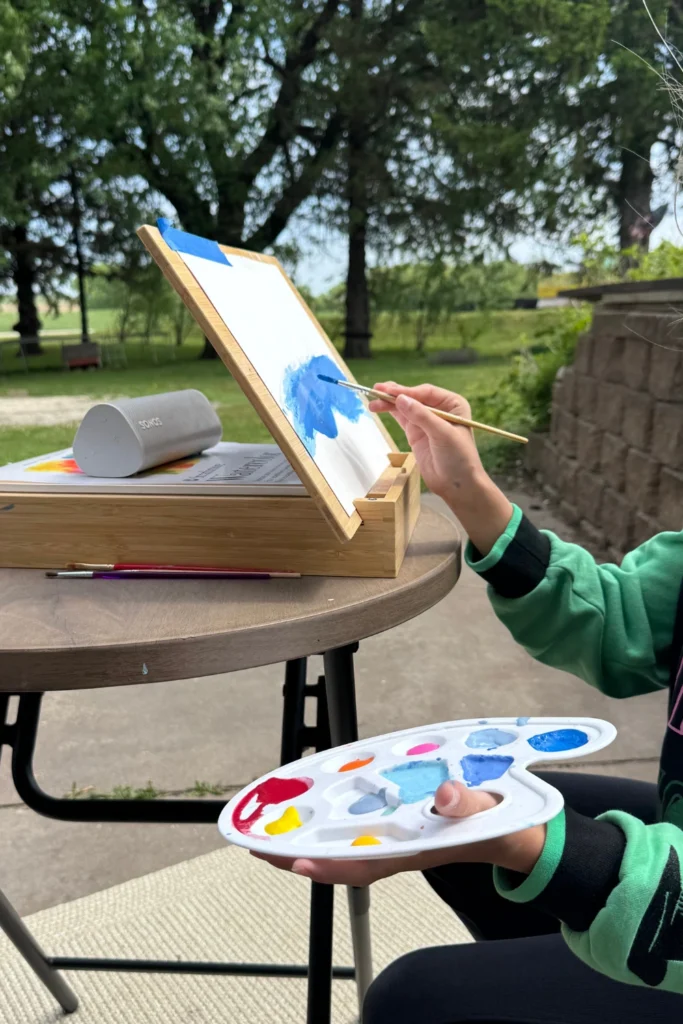
Waiting for the garden to grow. Waiting for sweet corn season. Waiting for sunny bike rides. Waiting to see friends on farmer’s market nights. Waiting for thunderstorms after a stretch of heavy heat.
And perhaps this is where we gently begin again.
Not through rigid rules or removing every small joy, but simply by allowing more room for anticipation to exist.
Maybe treats become occasional again instead of automatic. Maybe boredom is not solved immediately. Maybe children save for something they truly want instead of receiving it instantly. Maybe summer regains a few slower rhythms.
Friday pizza nights. Berry picking in July. Movie nights on the porch. Ice cream after baseball games instead of every afternoon.
Not because children need less joy.
But because anticipation deepens joy.
Raising Resilient Kids Without Chasing Perfection
None of this requires perfection.
Every generation has its own struggles. Ours simply happens to be navigating constant immediacy.
Childhood does not need to become austere in order to become meaningful again.
Most of us are simply trying to raise good humans in a culture that rarely slows down long enough to ask what children truly need.
And perhaps one of the greatest gifts we can give our kids is not constant comfort or endless convenience —
but the child’s ability to fully appreciate good things when they finally arrive.
Because some of the very best parts of life are still worth waiting for.
Pin for Later
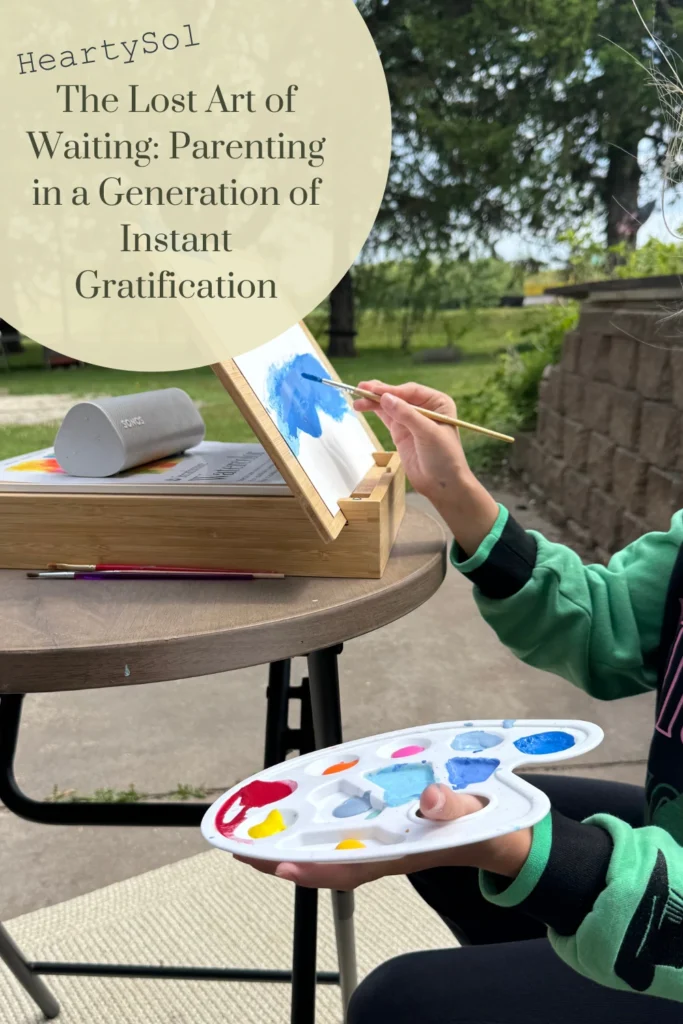
The sweetest memories are built on what’s sacred – mindfulness that the moments right in front of us are asking to be appreciated fully.
So have a conversation before looking up the answer on Google, designate a day of the week to go out for a treat, let the radio decide what song plays next, and I think you’ll start feeling more grounded 🙂
I’d love to hear your thoughts on flipping the script on instant gratification!
Welcoming the Warm Months

Affiliate Disclosure & Content Disclaimer
This post may contain affiliate links from a paid sponsor, Amazon or other program. When you use these links to make a purchase I earn a small commission at no extra cost to you. This allows me to continue creating the content that you love. The content in this article is created for information only and based on my research and/or opinion.
Emily T.
Leave a Reply



DAILY INSPIRATION ON THE GRAM @hearty.sol
it's hip to be square!
Love it!