

The Natural Tick Repellent We Trust (and Actually Use)
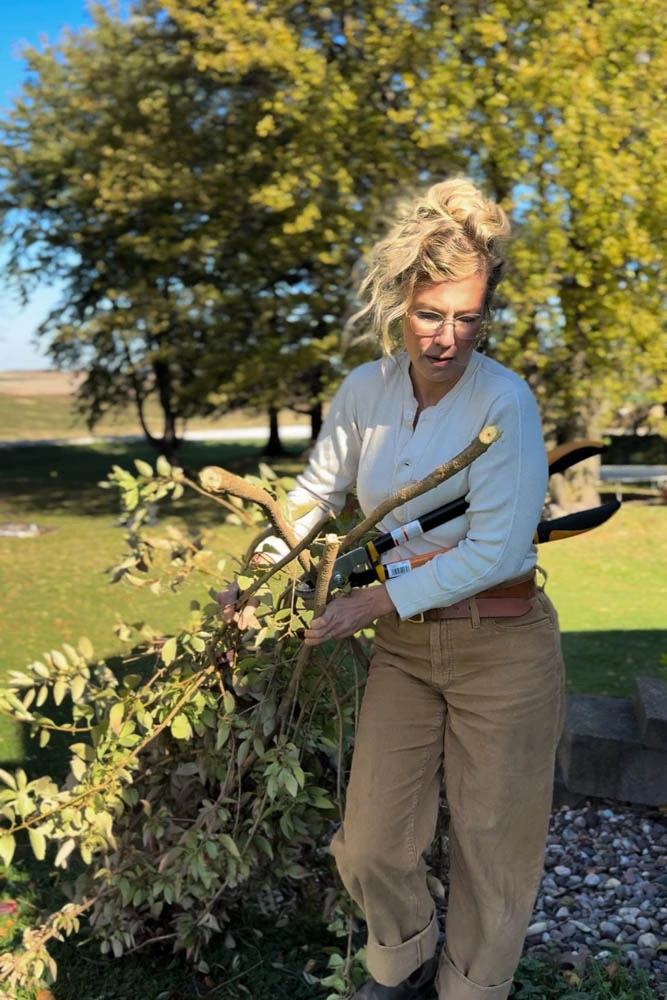
There’s a stretch of the year when ticks are just part of it. Tall grass, kids moving in and out of the house, chores that keep you outside longer than planned. It’s not dramatic—it’s just reality.
Why We Even Bother Protecting Against Ticks
There is often a misconception in the Midwest that ticks are only something you need to worry about when taking a trip up north or going on a camping excursion when in reality, they show up in your backyard, in the tall grass, in the piles of leaves, and even in your garden.
Living in Minnesota during tick season, ticks are just something you plan around.
Over time, I’ve learned the goal isn’t to find a perfect solution. It’s to have a few simple things that you actually use.
This essential oil-based tick is one of them. We keep it by the back door all season.
- Tick Protection we actually use
- How do these natural ingredients work?
- Making Natural Tick Repellent
- Substitutions
- FAQs
- Natural Product Labels
- More ways to repel ticks
- What should I do if I get a tick bite?
- Pin for Later
Getting Proactive about Tick Protection
Instead of reacting after the fact, we try to stay a step ahead in simple ways. Intentional habits we pick up this time of year.
- boots by the door
- a quick check at night
- and something to put on before heading outside
Nothing complicated. Just part of the routine.
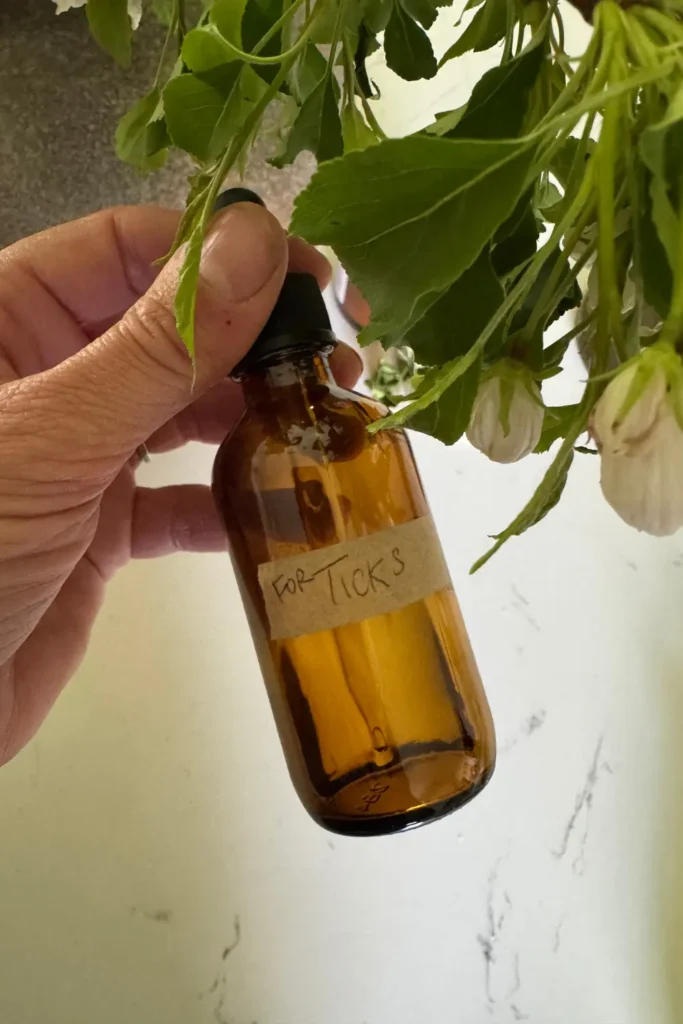
Tick Protection We Actually Use
I used to make a water-based spray—vinegar, essential oils, the whole thing.
It was fine for quick trips outside, but it didn’t last. If you were working, walking fence lines, or just outside for a while, it wore off fast.
And realistically, no one re-sprays every hour.
Why does this version work better? This version is oil-based, so it stays on the skin longer and holds up through real use.
Why These Ingredients Work
Nothing fancy here—just simple pieces that work together.
- Jojoba oil
This is the base/carrier oil. It’s stable, lightweight, and helps the essential oils stay on the skin longer without feeling greasy. - Cedarwood essential oil
The main one I don’t skip. Strong, earthy scent that ticks tend to avoid. - Lavender essential oil
Helps balance the blend and makes it more skin-friendly for regular use. - Eucalyptus essential oil
Sharp, clean scent that strengthens the overall blend. - Lemongrass essential oil
Bright and citrusy. Helps round it out and adds another layer to the scent profile.
It’s not about one ingredient doing everything—it’s the combination.
Where can I get essential oils for making natural tick spray? I opt for doTERRA oils – the variety packs especially last us!
How to Make Natural Tick Repellent
Ingredients:
- 2 tablespoons jojoba oil
- 10 drops cedarwood essential oil
- 10 drops lavender essential oil
- 5 drops eucalyptus essential oil
- 5 drops lemongrass essential oil
Instructions
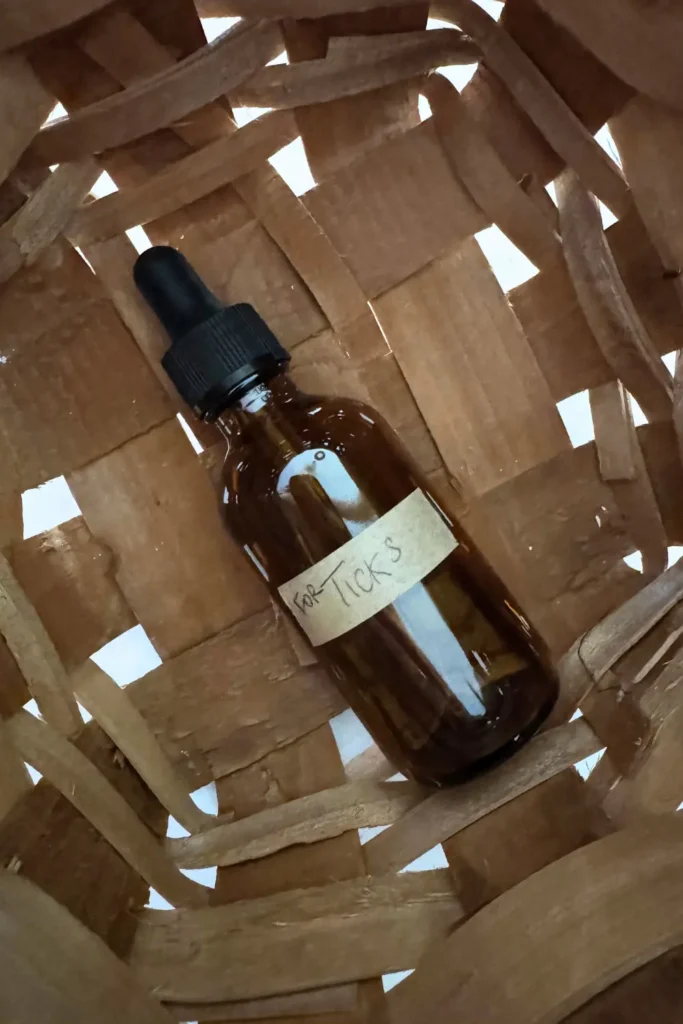
Add everything to a small 2oz glass dropper bottle or roller bottle. Shake gently before each use
That’s it.
How to use
A little goes a long way. We apply a small amount to:
- ankles and lower legs
- behind the knees
- wrists
- back of the neck/ ears
Anywhere ticks are likely to latch on.
It takes less than a minute before heading out.
How often do you need to reapply?
Usually every few hours if we’re outside for a long stretch, or after heavy sweating.
Instruction Card
Natural Tick Repellent
Equipment
- 2oz glass dropper bottle or roller bottle
Ingredients
- 2 tablespoons jojoba oil
- 10 drops cedarwood essential oil
- 10 drops lavender essential oil
- 5 drops eucalyptus essential oil
- 5 drops lemongrass essential oil
Instructions
- Add everything to your dropper bottle or roller bottle
- Shake gently before each use
Notes
How to use
A little goes a long way. We apply a small amount anywhere ticks are likely to latch on. It takes less than a minute before heading out.- ankles and lower legs
- behind the knees
- wrists
- back of the neck/ ears
A Few Notes on Substitutions
I like keeping this simple, but I know not everyone has every oil on hand.
Easy swaps:
- Lemongrass → citronella or lemon essential oil
- Eucalyptus → tea tree oil
- Missing an oil or two → just use what you have
Cedarwood is the one I try not to skip if possible.
A few things I avoid:
- Overloading it with too many oils
- Adding water (it just doesn’t stay mixed)
- Applying directly to eyes or face
- Thinking of this as the only line of defense
This works best as one piece of a routine.
This tick repellent is made without water, why?
I’ve tried thinning it out before, but oil and water don’t stay mixed. Even with shaking, it separates, and you lose consistency every time you use it. More importantly, it shortens how long it lasts on the skin. Keeping it oil-based is what makes it practical.
Questions about Tick Prevention
We use it on our kids in small amounts—mostly ankles, legs, and arms. For younger kids, I apply it with my hands instead of spraying or dripping directly.
No. Nothing really does. Although this is a step in disease control, this is just one layer in staying ahead of them.
Tick season here in Minnesota spans from April-September. It’s easy to consciously protect in the heart of summer, but don’t forget early spring and late summer!
Like mosquitoes, ticks are attracted to your natural scent which is why this essential oil blend helps cover you with protection. I strongly recommend cedarwood oil – the strong fragrance masks your scent.
The glass bottles/rollers sit at around $7, a bottle of jojoba oil is less than $10, and essential oil prices will range depending on the amount and brand you purchase from. I love the affordability and knowing what I am putting (alcohol-free!) on my family before we head outside.
This blend is curated specifically to repel ticks. You can definitely use natural repellents like essential oils to keep mosquitoes away, but you will want to use a different blend: geranium oil, lemon eucalyptus oil, etc.
This recipe is made to be safe and effective – if you have sensitive skin or know you have allergic reactions to some of these oils then do a patch test and modify as needed.
Grab my free Homemade Product Labels HERE!
Other labels included in this printable include: Spring Perfume, Tallow and Honey Body Wash, Glass Cleaner, my DIY Dry Shampoo, All-Purpose Cleaner, Homemade Dishwashing Soap, Soft Scrub, Healing Tallow Sugar Scrub, and Laundry Whitener
What We Do Along With the Repellent
This oil blend helps, but it’s not the only thing we rely on. Over time, I’ve learned that effective tick repellent and avoiding ticks is less about one perfect solution and more about a few simple habits stacked together.
Clothing choices matter
Are there any clothing items that can prevent me from getting a tick bite? We keep it pretty simple: light colored clothing, tucking in, and close-fitting fabrics can help
Light-colored clothing
Ticks are easier to spot before they ever make it to skin. Dark clothes make that harder.
Tuck things in when it makes sense
Socks over pants, or pants into boots. It’s not fancy, but it works as a barrier.
Close-fitting, smooth fabrics
Loose, fuzzy, or textured fabrics give ticks more places to grab onto. Smoother work pants or athletic-style fabrics are easier to manage outdoors.
Take a look inside my closet for clothes I trust in each season
A simple physical barrier trick
One thing those in outdoor work have used for a long time is a basic tape barrier.
Some wrap duct tape, sticky-side out, around pant cuffs or socks. The idea is simple—if a tick tries to crawl up, it gets caught before reaching skin.
It’s not perfect and it’s not something we rely on alone, but it can be helpful in higher-risk areas like tall grass or brush edges.
Being aware of where you’re walking
This one probably matters more than anything else:
- Ticks don’t jump
- They climb from grass, brush, and leaf litter
- They’re most common at field edges and overgrown areas
Staying on mowed paths or walking through the center of trails reduces exposure more than people realize.
Flowers as a natural barrier?
This is something I’m curious about. Planting the actual blooms that make up the essential oil mix along the barriers of the garden: sage, lavender, etc.
Please share if you have tried this method!
The part we never skip: checking
Even with everything else in place, we still check.
- ankles
- behind knees
- waistband
- under sleeves
- hairline (especially kids)
- armpits
Most ticks don’t attach right away—they wander first. Catching them early makes a big difference.
If possible, a quick shower after being outside helps too.
What should I do if I find a Tick?
Even with prevention, it still happens. The goal isn’t panic—it’s just knowing what to do next.
First, don’t squeeze it or try to burn it off. Just remove it as soon as you can.
Use fine-tipped tweezers, grab it as close to the skin as possible, and pull straight up with steady pressure.
Then clean the area with soap and water.
That’s it.
If you want to keep it for identification, put it in a small sealed bag or container.
After You Remove It
Once it’s out, just keep an eye on the area for a few days.
You’re looking for:
- expanding redness
- rash or irritation
- flu-like symptoms
If anything feels off, it’s worth checking in with a healthcare provider.
Pin for Later
Putting it all together
We don’t rely on one thing.
We use:
- a simple oil blend before going outside
- thoughtful clothing choices
- awareness of where we’re working
- and a quick check when we come back in
None of it is complicated on its own. But together, it’s what actually makes outdoor work manageable.
At the end of the day, it’s not about one perfect thing. It’s about simple habits, done consistently.
Welcoming the Warm Months

Affiliate Disclosure & Content Disclaimer
This post may contain affiliate links from a paid sponsor, Amazon or other program. When you use these links to make a purchase I earn a small commission at no extra cost to you. This allows me to continue creating the content that you love. The content in this article is created for information only and based on my research and/or opinion.
Emily T.



DAILY INSPIRATION ON THE GRAM @hearty.sol
it's hip to be square!
View comments
+ Leave a comment