
The Garden Is Over. Now Comes the Part I Love.
There comes a point every fall when the garden makes the decision for you.
A few chilly nights finally convinced me it was time to pull everything that was still hanging on. The tomatoes came in. The squash came in. The onions and garlic were gathered up. The potatoes were dug. The last of the flowers were brought inside.
And now my kitchen looks a little bit like the garden exploded in it.
Which, if I’m being honest, I don’t mind one bit this year.
This is the part of gardening I think I might love most.
Not the planting.
Not even the harvesting.
It’s what comes afterward.
The putting away. The sorting. The preserving. The looking at everything we’ve grown and deciding what is worth saving for January.
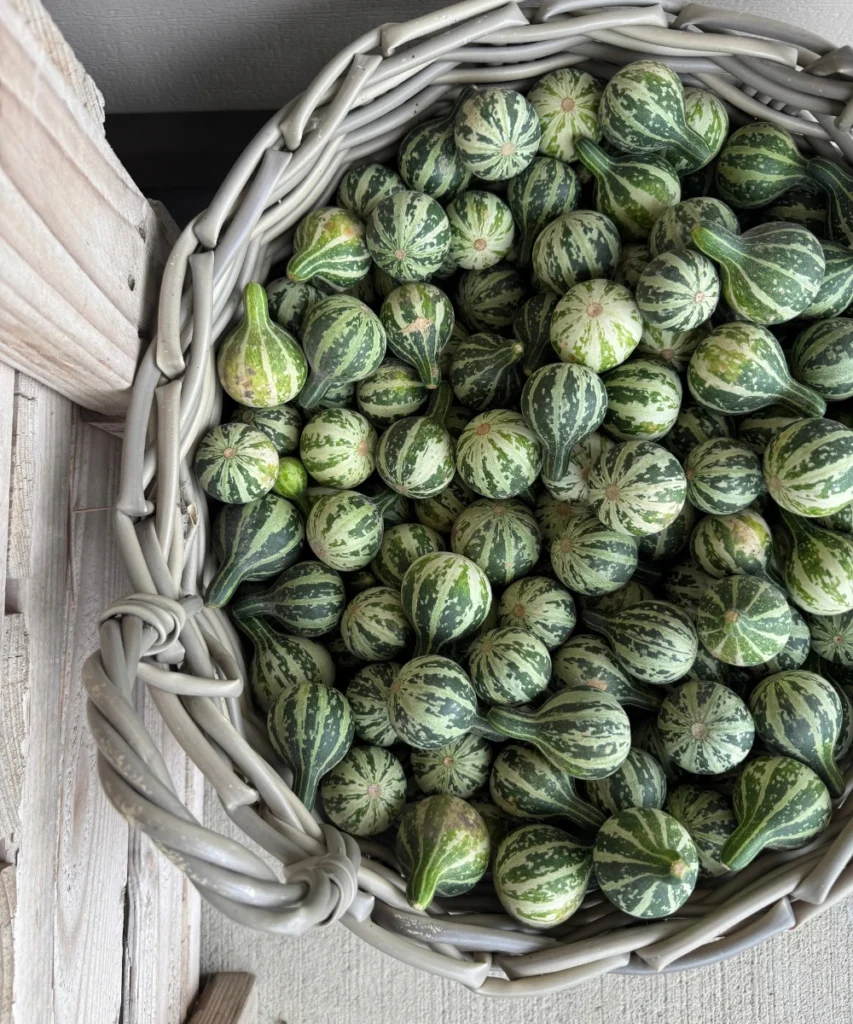
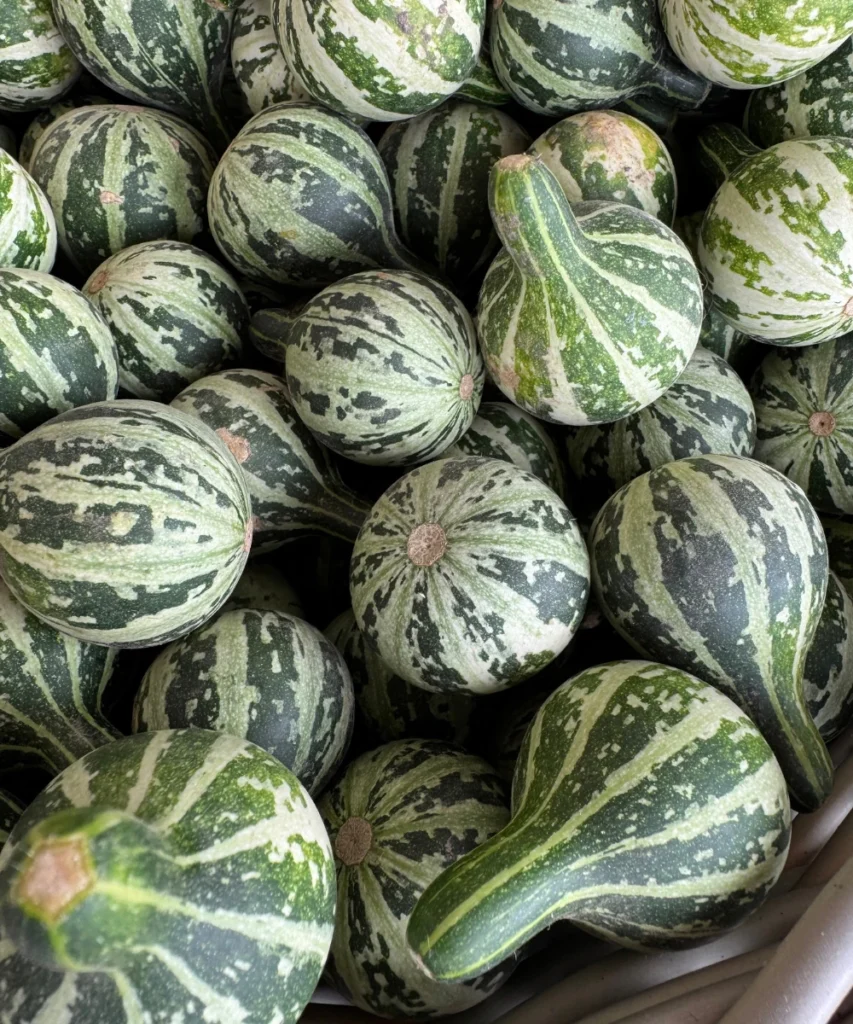
This weekend we also harvested approximately 850 mini spinner gourds.
Eight hundred and fifty.
I’m not sure at what point I crossed the line from growing some gourds to becoming the woman who tossed in a few too many ‘insurance seeds’, but here we are.
I would like to point out that I did not set out to create a small gourd empire.
It just sort of happened.
And now they’re everywhere. (The kids love having spinning contests during dinner).
There is something about this time of year that I really love. The garden is technically finished, but the work isn’t. Summer is still sitting on the kitchen counter in baskets and boxes and little piles waiting to be dealt with.
And eventually, if we do it right, all of that summer gets tucked away.
Putting Summer Away
For years, I have stored things wherever I could find a spot.
Some squash in the basement. Potatoes in a basket somewhere. Onions tucked into a corner. Garlic hanging in one place and another. Apples in the refrigerator. Tomatoes in the freezer.
And then, inevitably, I’d be standing in the kitchen thinking, I know I have more of those somewhere.
This year is different.
We have the new pantry. Or, as I like to call it, the Hidden Household Pantry
And I am ridiculously excited about it.
Everything is finally going to have a place where I can actually see it.
The squash will be lined up where I can see which ones need to be used first. The potatoes will have a proper place. The onions and garlic will be within sight. I’ll be able to walk in, look around, and know what we have.
That may not sound terribly exciting.
But after years of hiding perfectly good food in various corners of the house, I can tell you it feels like a luxury.
The pantry isn’t just going to hold food.
It’s going to hold the remains of summer.
Winter Squash
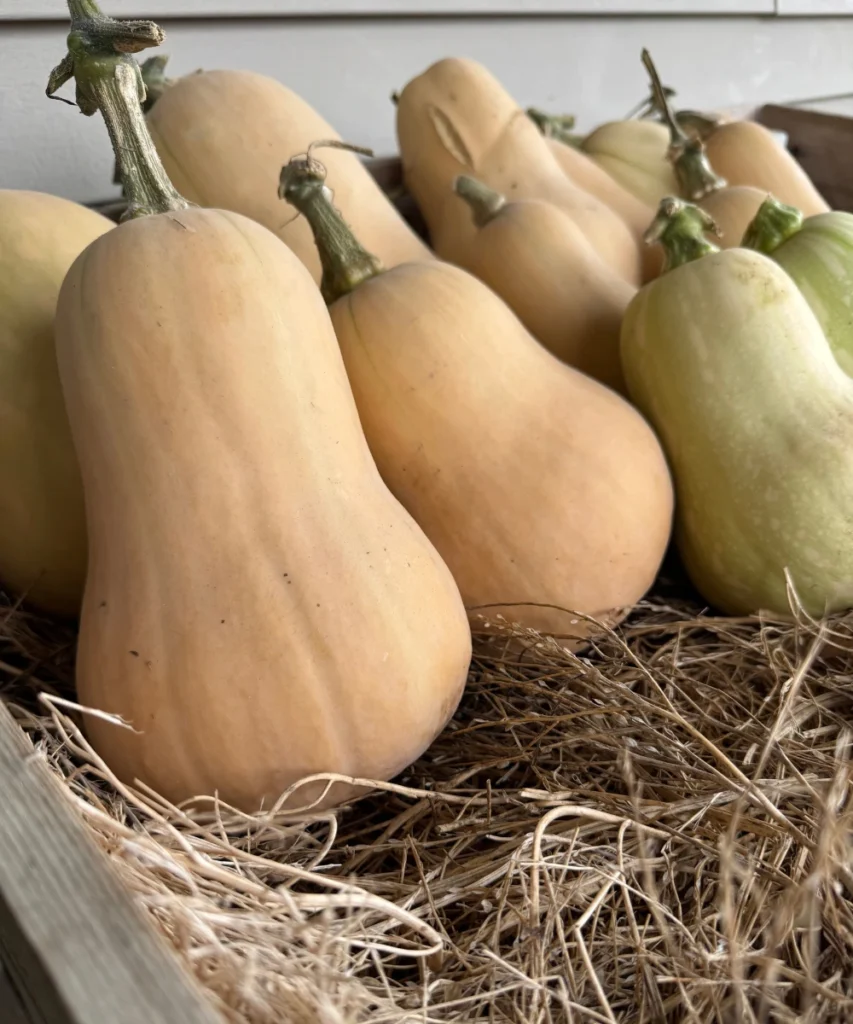
The winter squash is the first thing I’m putting away right now.
Butternut is one of those crops that makes me feel like I’ve really accomplished something. You plant it, spend half the summer watching it take over the garden, and then suddenly you’re carrying armfuls of squash into the house.
I sort through them first.
Anything bruised, damaged or questionable gets moved to the front of the line instead of being tucked away for months. The good ones get a dry, cool place with some air around them.
Some we’ll leave whole and use throughout the winter.
Some I’ll roast and freeze.
And some will eventually become soup.
I like food that doesn’t need me to fuss over it.
A good winter squash can sit quietly on a shelf for a long time, minding its own business until a January evening when I suddenly remember that we have one.
This is my kind of convenience.
My Squash Recipes:

Tomatoes
The tomatoes are a little more demanding.
By this time of year, I’m usually tired of dealing with them.
Which is funny because in July I’m convinced there is nothing better in the world than a tomato still warm from the garden.
By September, I am happy to eat one fresh and put the rest away.
Some go into sauces. Some get roasted. Some are simply frozen whole.
There is something wonderfully uncomplicated about throwing tomatoes into a freezer bag and calling it good.
The freezer bag is exactly the right amount of ambition for September.
Later, those tomatoes can go into chili, soup, pasta sauce or whatever else needs a little bit of summer.
And if you’re canning, this is where I think it’s important to say the boring thing: use a tested recipe and follow the recommended processing method. This is one place where I am perfectly happy to let somebody else do the figuring out.
My Tomato Recipes:
- Minestrone Soup
- Sun Dried Tomatoes: Lessons from Italy
- Creamy Tomato Bisque
- Homemade Tomato Soup
- Homemade V8 Juice
- Gazpacho Recipe
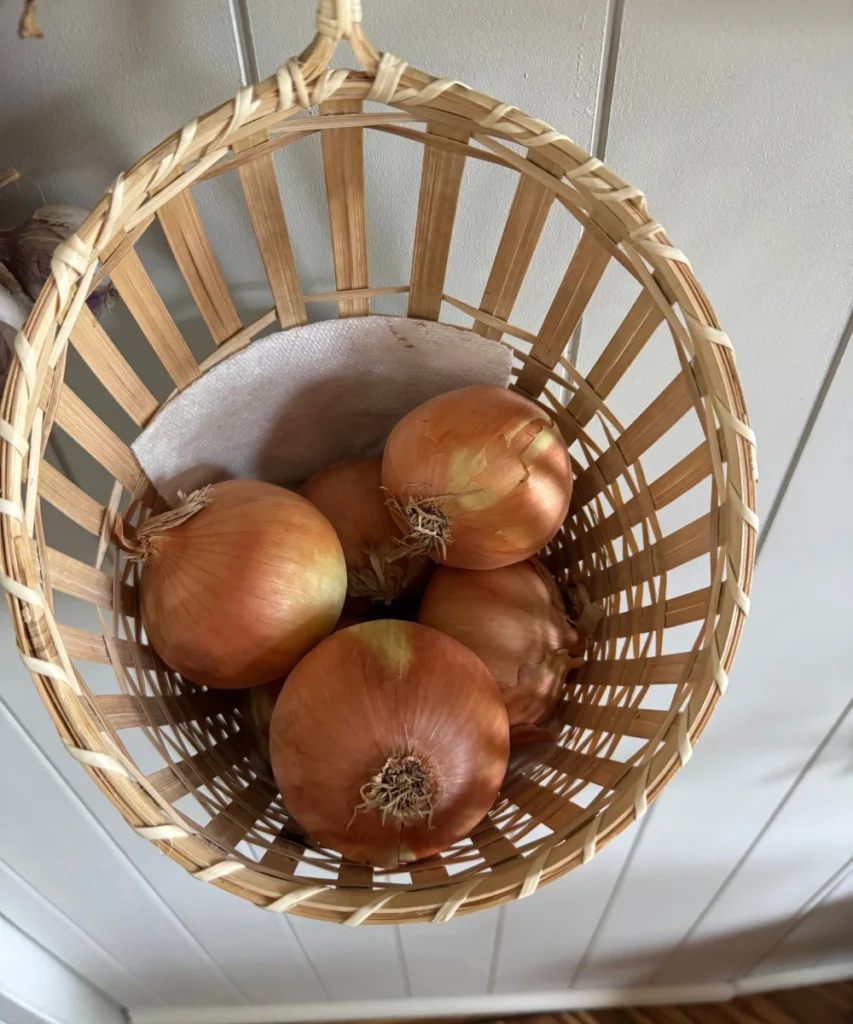
Onions & Garlic
The onions and garlic are some of my favorite things to put away.
They’ve already done most of the work by the time they come into the house.
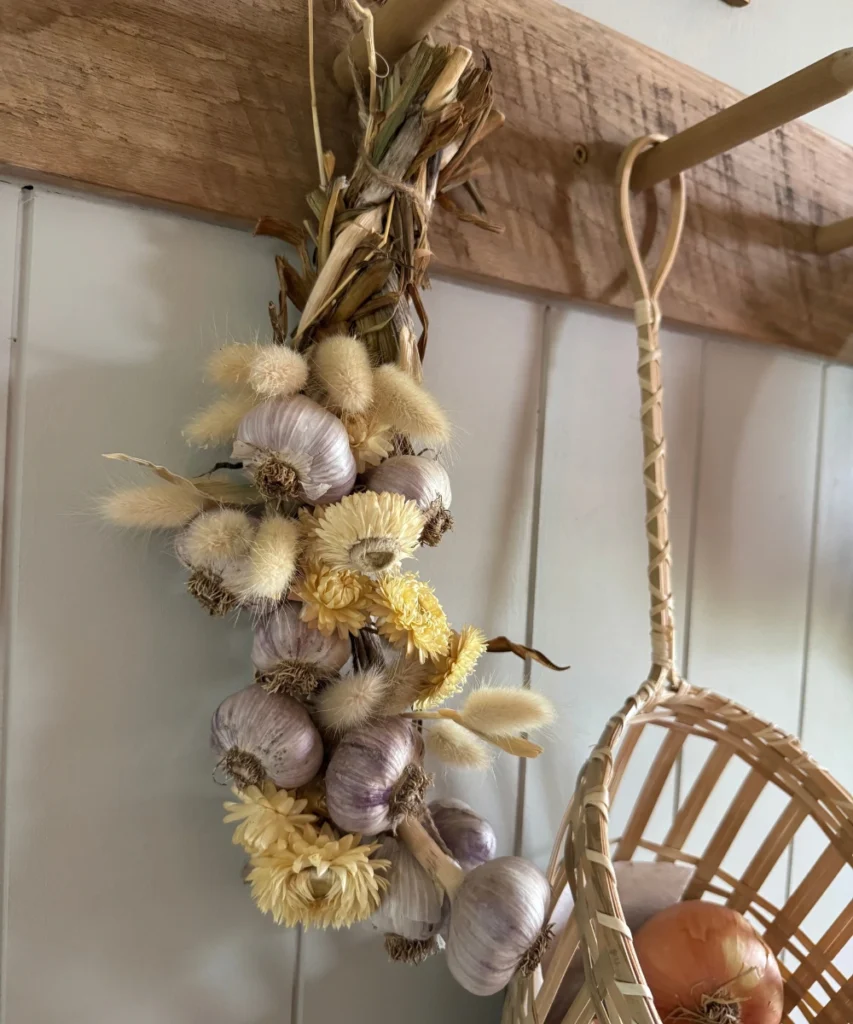
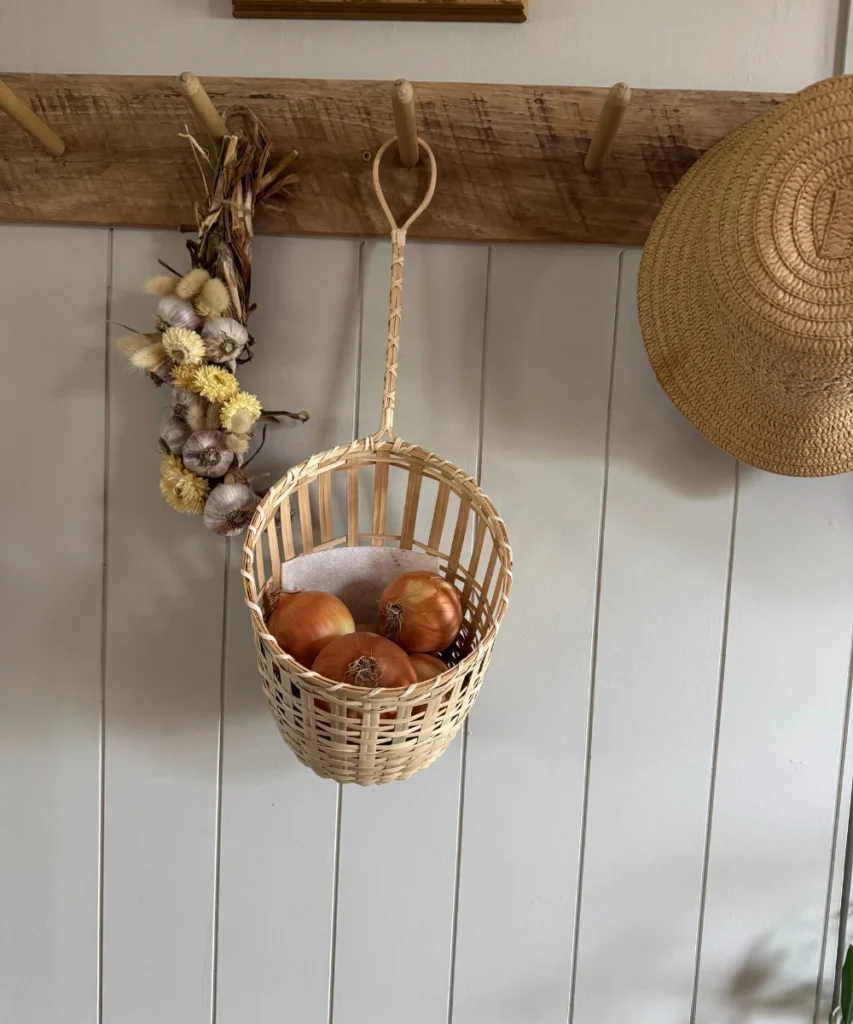
I let them cure properly, then I braid some of them because, well, braided onions and garlic are just pretty.
The rest?
I plop them into baskets.
That is about the extent of my system.
The important thing is keeping them somewhere cool, dry and well ventilated, and not forgetting about them.
The garlic gets special treatment because I save some of the very best bulbs for planting the following fall.
Which feels a little magical to me.
You harvest garlic in July and by October it’s already thinking about next year.
Some things are always planning ahead.
How I use my Garlic & Onion Harvest:
- Fermented Honey Garlic for “sick season”
- Homemade Garlic Powder
- Garlic Knot Appetizer
- Mild Veggie Giardiniera
- Grandma’s Pickled Deer Heart
Oh, the Potatoes
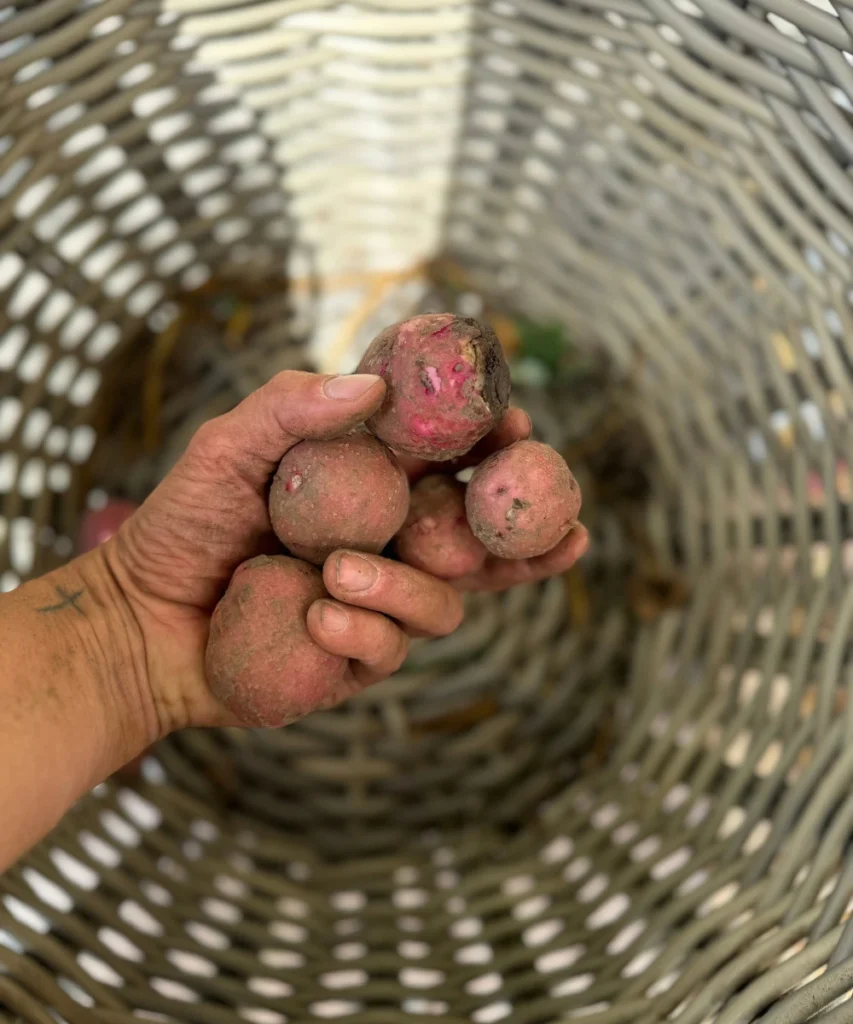
The potatoes get their own paragraph because the potatoes get me every time.
There is something about digging potatoes that feels like Christmas morning. The kids used to fight over who got to dig them out of the soft dirt.
The’d put their hand down into the dirt and suddenly there are potatoes everywhere.
The problem is that you don’t realize quite how many potatoes you have until you have carried them all into the house.
They need to be cured and sorted, and then kept somewhere dark and cool.
And you have to check them.
Often.
Because nothing will humble you quite like walking into a room and wondering why it smells like a dirty sock.
It’s the potatoes.
Every time.
One bad potato can make the whole room smell suspicious, so I try to stay on top of them and pull anything that is starting to go.
I’ll use them in chili, casseroles, soups and stir-fries throughout the winter.
It’s one of those little jobs that feels slightly ridiculous when you’re doing it in September and wonderfully smart when you’re standing in your kitchen in February.
My Recipes that use Potatoes:
- Creamy Potato Soup
- Homemade Shepherd’s Pie with Cheesy Potato Topping
- Cozy Chicken Gnocchi Soup with Homemade Gnocchi
Apples
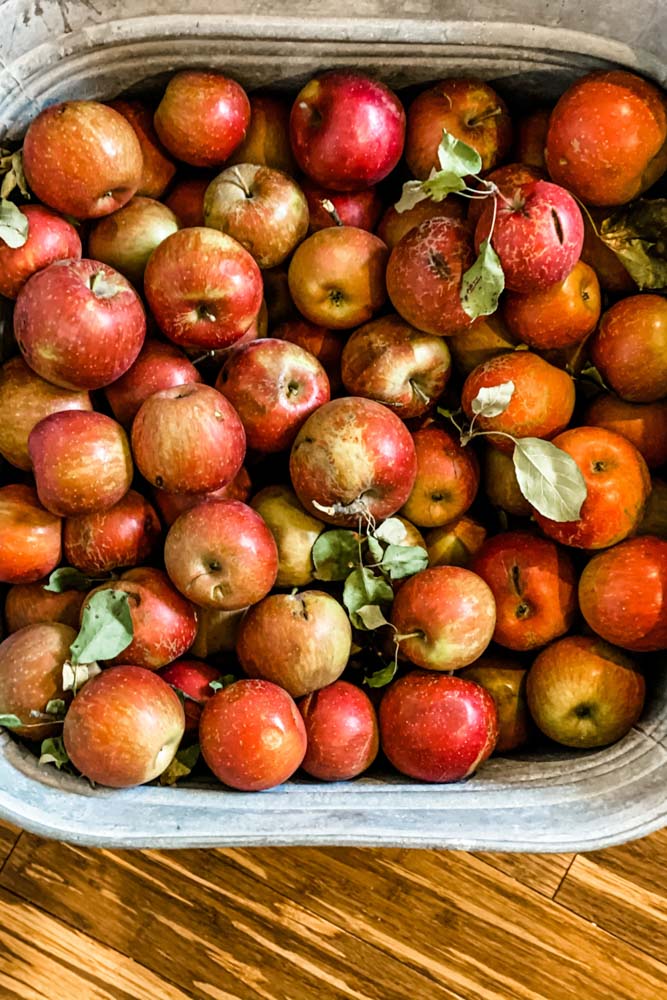
Our family always has a bowl of apples sitting on the counter. The apples gave us a huge bumper crop again this year and we will be picking them shortly.
Some get eaten just as they are.
Some go into applesauce. Some become apple butter. Some get dried or frozen or tucked away for later.
And sometimes an apple is just an apple.
There’s something about having a bowl of homegrown apples sitting in the kitchen that makes a house feel like fall.
I don’t think everything needs to become a project.
Sometimes we can just put the apples in a bowl and eat them.
And Then There Are the Gourds
The gourds deserve their own section simply because there are 850 of them.
I don’t have a reasonable explanation.
They are little striped, twisted, funny-shaped things, and somehow we ended up with enough of them to decorate several houses.
Some will go into baskets.
Some will become fall arrangements.
Some will probably find their way to the Winter Shop as ornaments or garland.
Some will be tucked away for gifts or used on tables throughout the season.
And some will simply sit around looking cute.
I think there is something worth remembering here too.
Not everything you grow has to feed you.
Some things can simply be beautiful.
Some things can make you smile.
Some things can become part of your home for a season.
And apparently, sometimes you can grow 850 of those things.
I’ve Finally Learned to Garden for the People Who Actually Eat the Food
This may be one of the biggest things gardening has taught me.
I used to plant things because I could grow them.
Not because we necessarily liked eating them.
I’d plant. I’d tend. I’d weed. I’d water. I’d harvest.
And then eventually I’d realize nobody in our family was particularly interested in eating what I’d spent all summer growing.
So I’d give it to the ducks.
Zucchini was a particularly good example.
We don’t eat much zucchini.
And I break out in hives just from touching the plant.
Yet year after year I would plant it anyway.
At some point I finally thought, Why am I doing this?
I can get a zucchini from a neighbor when I want to make zucchini bread or muffins.
I don’t need to spend an entire summer growing something my family doesn’t particularly want, especially when the plant itself gives me a reaction.
I didn’t have to risk anaphylaxis for a loaf of zucchini bread.
What a revelation.
I’ve learned that a garden doesn’t have to prove anything.
It doesn’t have to contain every vegetable I’ve ever seen in a seed catalog.
It doesn’t have to be impressive.
It doesn’t have to produce more than we can eat.
I want to grow the things my family actually reaches for.
The things that make their way into supper.
The things I’ll be grateful to find in January.
And if something gets harvested and ignored and eventually fed to the ducks?
Well, maybe we don’t need to grow that one next year.
Every year teaches you a little more about what works.
And sometimes what works is knowing what not to plant.
The Pantry Changes Everything
This is probably the part I’m most excited about this year.
For the first time, I will be able to see the harvest.
I won’t have to remember which basket is holding the onions or which corner has the last few potatoes or where I tucked those apples.
I’ll be able to walk into the pantry and see it.
And that matters.
Because stored food needs to be checked.
It needs to be rotated.
You have to notice when something is beginning to soften or sprout or go bad.
You have to use the things that need using and leave the things that can wait.
Otherwise, you end up opening a basket six months later and discovering something that has apparently been conducting its own science experiment.
You have to check. Often.
Especially the potatoes.
Did I mention the potatoes?
I’m hoping the new pantry will make this part easier simply because everything will be in front of me.
And there is something deeply satisfying about that.
To see the squash.
The onions.
The garlic.
The potatoes.
The jars.
The baskets.
The things we’ve grown with our own hands.
A full pantry is a little like a memory.
It holds muddy boots and hot mornings and baskets carried in from the garden.
It holds the meals we ate while everything was growing.
It holds the work.
And someday, in the middle of January, when everything outside is white and cold and quiet, I’ll open that pantry door.
And summer will still be in there.
A Few Things I’ve Learned
I’m certainly no preservation expert, but after enough seasons of growing and storing food, there are a few things I’ve learned.
Cure what needs curing.
Don’t rush things into storage simply because you’re tired of looking at them.
Don’t store questionable produce.
If something is damaged or already beginning to rot, deal with it now rather than putting it away with everything else.
Give things the conditions they actually need.
Cool, dry, dark, ventilated — depending on what you’re storing.
Rotate produce.
The oldest produce should be the first thing you reach for.
Check your storage regularly.
This is not the glamorous part, but it might be the part that saves the harvest.
And perhaps most importantly:
Preserve food in ways your family will actually use.
There’s no prize for having the fullest freezer or the most jars on the shelf.
The best preservation method is the one that gets eaten.
The Garden Is Over
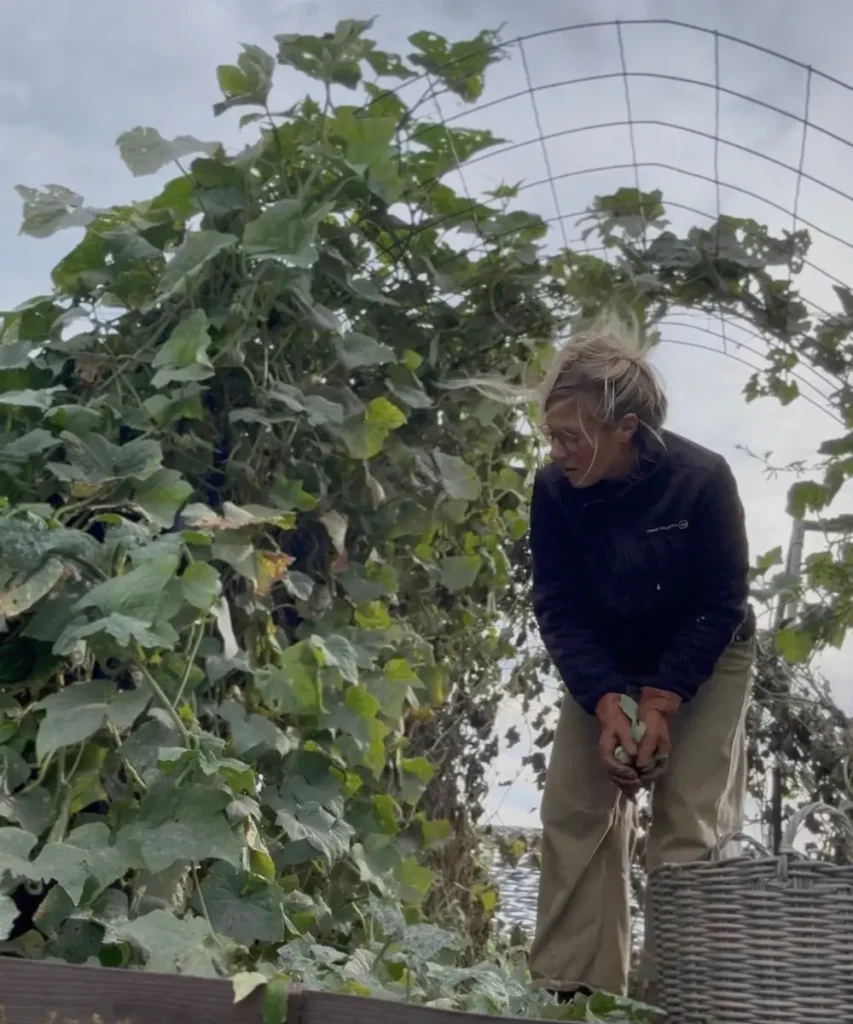
The garden is finished now.
The beds are empty.
The vines are gone.
The flowers are fading.
Outside, everything is beginning to settle down for winter.
But inside?
We’re just getting started.
There are squash waiting in the pantry.
Tomatoes in the freezer.
Apples on the counter.
Potatoes in their baskets.
Garlic and onions hanging nearby.
And somewhere in all of this, 850 little gourds are waiting to become something beautiful. You need any?
You spend all summer trying to keep up with what is growing.
Then fall comes, and you spend a few weeks trying to figure out where to put it all.
And somehow, I wouldn’t have it any other way.
Because when the snow finally comes, I know I’ll be grateful for every basket, every jar, every frozen bag and every little piece of summer we managed to bring inside.
The garden may be finished.
But the harvest is just beginning.
Cheers friends!

Affiliate Disclosure & Content Disclaimer
This post may contain affiliate links from a paid sponsor, Amazon or other program. When you use these links to make a purchase I earn a small commission at no extra cost to you. This allows me to continue creating the content that you love. The content in this article is created for information only and based on my research and/or opinion.
Emily T.


DAILY INSPIRATION ON THE GRAM @hearty.sol
it's hip to be square!
View comments
+ Leave a comment